
OBERHAUSEN - 9 HOLES - FREE

OBERHAUSEN
CITY MAP MINIGOLF

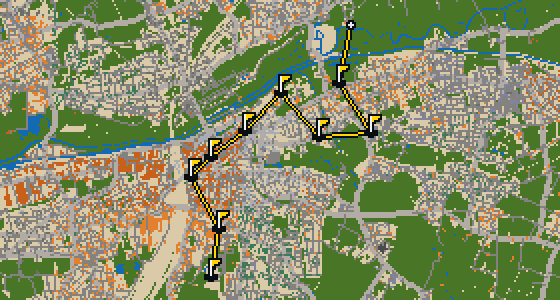
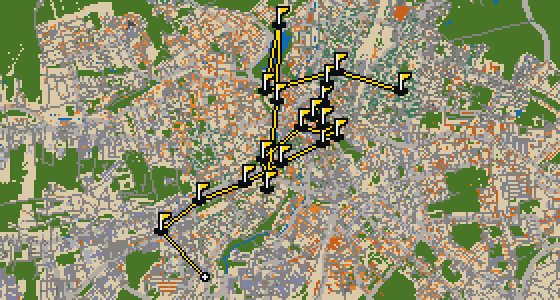
Oberhausen - 9 stops - par 29

Banking a ball off the stone of Schloss Broich requires a steady wing and a soft touch. This round takes place on the real streets of Oberhausen, where the city map is the course. The holes are built from actual local attractions, and Skip knows every crack in the pavement. A quick 9-hole round covers 6 km, with 14 portals to keep the ball moving.

Trouble loading? Open the game in its own tab.

HOW IT WORKS

01

Pick a city

The course is drawn on the real street grid, so the map you play is the map you walk.

02

Putt to the pin

Drag to aim, release to swing. Buildings bounce and water costs you a stroke.

03

Sightsee between strokes

Every hole ends at an attraction. Sink the putt, read the story, walk to the next tee.

THE OBERHAUSEN ROUND - STOP BY STOP

HOLE 1 - PAR 3

Altstadt

Let me show you the Altstadt. This area is an old town and is classified as an Ortsteil. It is a place where you can experience the traditional center of the city. I find it is a great spot to get your bearings before heading further into the city streets.

Wikidata

HOLE 2 - PAR 3

Freilichtbühne Mülheim an der Ruhr

You might expect a standard modern stage or a small community garden here, but this is actually an open-air amphitheatre. Known as the Freilichtbühne Mülheim an der Ruhr, it is a sylvan theater located in North Rhine-Westphalia, Germany. While it looks like a peaceful spot for a show today, it was built in 1936 as a Nazi Thingplatz. It is a massive space that can hold 2,000 seats, making it a prominent landmark in the local landscape. I've seen plenty of crumbs dropped in these seats by distracted visitors, but the history of the site is the real thing to notice. It is a place where the design of the past meets the greenery of the present, offering a unique atmosphere for anyone who wanders through the area.

Wikidata · Wikipedia

HOLE 3 - PAR 3

Wasserbahnhof

North Rhine-Westphalia has designated the Wasserbahnhof as an architectural heritage monument. This site is a jetty, providing a specific point of access to the water. For those visiting Oberhausen, it is a place where the city's structural history meets the river. I have found that the area around these old monuments often has the best views of the current. You can see how the design of the jetty reflects the heritage standards of the region. Whether you are here for the history or just passing through, it is a distinct landmark in the local landscape. It is always worth slowing down to look at the materials used in these protected sites, as they tell a story about how the city was built and maintained over the years.

Wikidata

HOLE 4 - PAR 2

Schloss Broich

Schloss Broich is a castle located in Oberhausen. It is designated as an architectural heritage monument in North Rhine-Westphalia, which means it is protected for its historical and structural value. You can see that the foundations of this site go back a long way, as construction was started in 884. I've found that the stone walls here make for a great place to keep a sharp eye on the surrounding area. Whether you are interested in the region's history or just want to see a well-preserved example of local architecture, this site is a key landmark in the city. It provides a glimpse into the early fortifications of the area and remains a significant point of interest for anyone visiting the district.

Wikidata

HOLE 5 - PAR 3

Camera Obscura

You can find the Camera Obscura in a 25.5 m high water tower located in the Broich district of Mülheim. This structure is part of the Industrial Heritage Trail and has functioned as a museum since its inception in 2006. The tower is best known for housing the world's largest walk-in camera obscura, giving you a chance to see how light and optics work on a massive scale. If you look closer at the exhibits, you can find the Museum zur Vorgeschichte des Films. This permanent exhibition focuses on the development of moving images before the invention of cinematography. I've noticed the tower makes for a great landmark when you're navigating the neighborhood.

Wikidata · Wikipedia

HOLE 6 - PAR 4

Wilhelminenkirche

Situated in the city of Oberhausen, Wilhelminenkirche is a church building that serves as a significant point of interest for those exploring the area. The structure is built in the Gothic Revival style, which is evident in its design and form. Beyond its use as a place of worship, the building is officially designated as an architectural heritage monument in North Rhine-Westphalia. This status indicates its importance to the regional history and architecture of the state. When you visit, you can observe the specific details of the Gothic Revival elements that define the building's exterior. Because it is a protected monument, the church remains a preserved example of this particular style within the urban environment of Oberhausen, offering a clear look at the architectural preferences of its era for any visitor passing through the neighborhood.

Wikidata

HOLE 7 - PAR 4

Kunstmuseum Mülheim

Let me show you the Kunstmuseum Mülheim. This site is a museum, providing a space where the community and visitors can engage with various works of art. It is a place designed for the exhibition and preservation of creative pieces, making it a point of interest for anyone visiting the area who appreciates a curated artistic environment. I have found that these kinds of spaces offer a nice change of pace from the bustle of the streets.

Wikidata

HOLE 8 - PAR 3

Alter Friedhof

You will first notice the stillness and the preserved atmosphere of Alter Friedhof. It is a cemetery that provides a quiet space for reflection and remembrance within the city. This site is more than a burial ground; it is an architectural heritage monument in North Rhine-Westphalia. This official designation means the location is recognized for its historical and structural value, ensuring that the physical characteristics of the cemetery are protected and maintained for all who visit. As you walk through the grounds, you can see how the layout and the monuments contribute to its status as a protected site. It remains a place where the city's history is physically present in the architecture of the graves and the surrounding landscape, offering a direct link to the past in a calm setting.

Wikidata

HOLE 9 - PAR 4

Pauluskirche

Pauluskirche is a church building in Oberhausen. As you approach, you will notice the structure's presence among the surrounding city buildings. This site is a place of worship, providing a space for prayer, reflection, and community gathering. It is an important landmark for those visiting the area, offering a direct contrast to the busier commercial streets nearby. Whether you are passing through on a tour or stopping for a moment of quiet, the building is a recognizable part of the local architecture. Its role as a church building makes it a center for spiritual life and a point of interest for anyone interested in the religious sites of the city. Take a moment to observe the exterior and the way it sits within the neighborhood before moving on to the next part of your journey.

Wikidata

STOP 10

Heilig Geist

Heilig Geist is a church building located in Oberhausen. This site is an important place of worship for the community and a point of interest for those visiting the city. Whether you are passing through on a tour or stopping for a moment of reflection, the structure is a notable landmark in the local area.

Wikidata

OTHER COURSES

9 HOLES - PAR 33

Hamm

9 stops

This quick nine-hole round covers 7.4 km across Hamm. The map is the real city and the ball rolls along its actual streets, using portals to skip between districts. Local attractions like Schloss Heessen are the foundations for the holes. Skip knows every curb and cobblestone here, even if a few crumbs usually distract the guide.

18 HOLES - PAR 53

Kassel

18 stops

Kassel is the setting for this round, where the map follows the actual city and the ball rolls across its real streets. The holes are built from the city's actual attractions, ending at the Spitzhacke. Skip knows these sidewalks well and is the local guide. This is a full round of 18 holes with a par of 53, covering a walk of 9.7 km. The ball moves between distant districts using 12 portals.

9 HOLES - PAR 31

Hagen

9 stops

The ball ends its journey at the Stadtgarten. This course uses the real streets of Hagen as the map, with the city's actual attractions forming the holes. A quick round of 9 holes covers 7.6 km, using 8 portals to bridge the gaps between distant districts. Skip knows every curb and cobblestone here, having spent plenty of time watching the world go by from the eaves.

18 HOLES - PAR 57

Delsberg

18 stops

Banking a ball off the stone facades of the Roter Turm requires a steady wing and a bit of luck. This round takes place in Delsberg, where the map is the real city and the game is played on its actual streets. The holes are built from real attractions, turning the urban layout into a course. I know these sidewalks well and can be the local guide. It is a full round of 18 holes with a par of 57, covering a 12.1 km walk that uses 10 portals.

18 HOLES - PAR 57

Chemnitz

18 stops

This is Chemnitz. The map is the real city and the round is played on its real streets, where the actual attractions are what the holes are built from. Skip knows these roads well, even the ones where the pigeons congregate. A full round of 18 holes covers 12.1 km with a par of 57, using 10 portals to skip across town. The ball banks off facades and rolls toward landmarks like the Roter Turm.

FAQ

Is it free to play?

Yes. Every course runs in the browser with no account and no install.

Do I need to be in the city?

No. The full round plays from anywhere. Walking the real route is a nice way to see the city, but it is not required.

Are the maps real?

Yes. The geometry comes from OpenStreetMap data, rendered chunky on purpose. Streets, water and parks sit where they really are.