
PORTLAND - 18 HOLES - FREE

PORTLAND
CITY MAP MINIGOLF

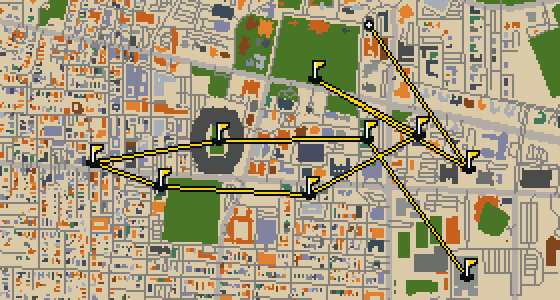
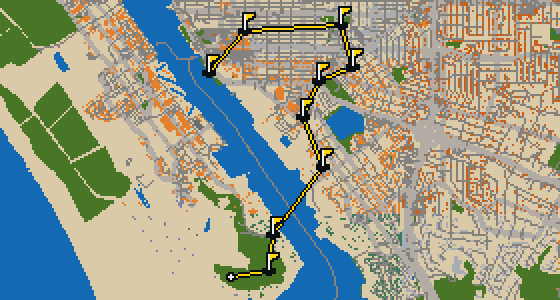
Portland - 18 stops - par 60

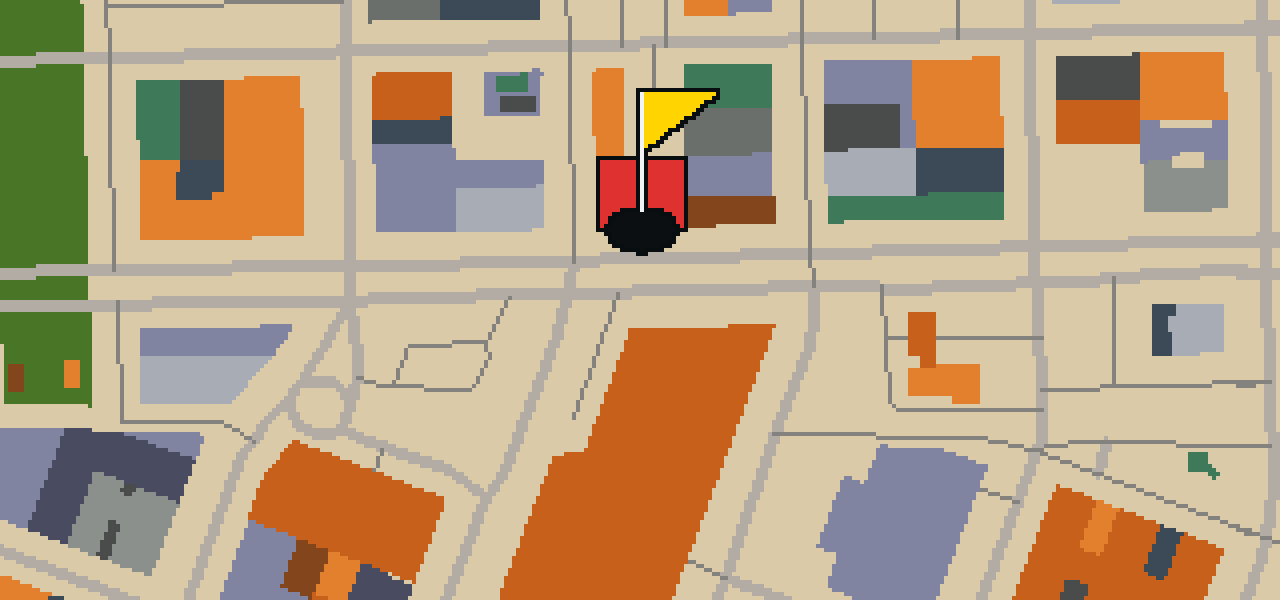
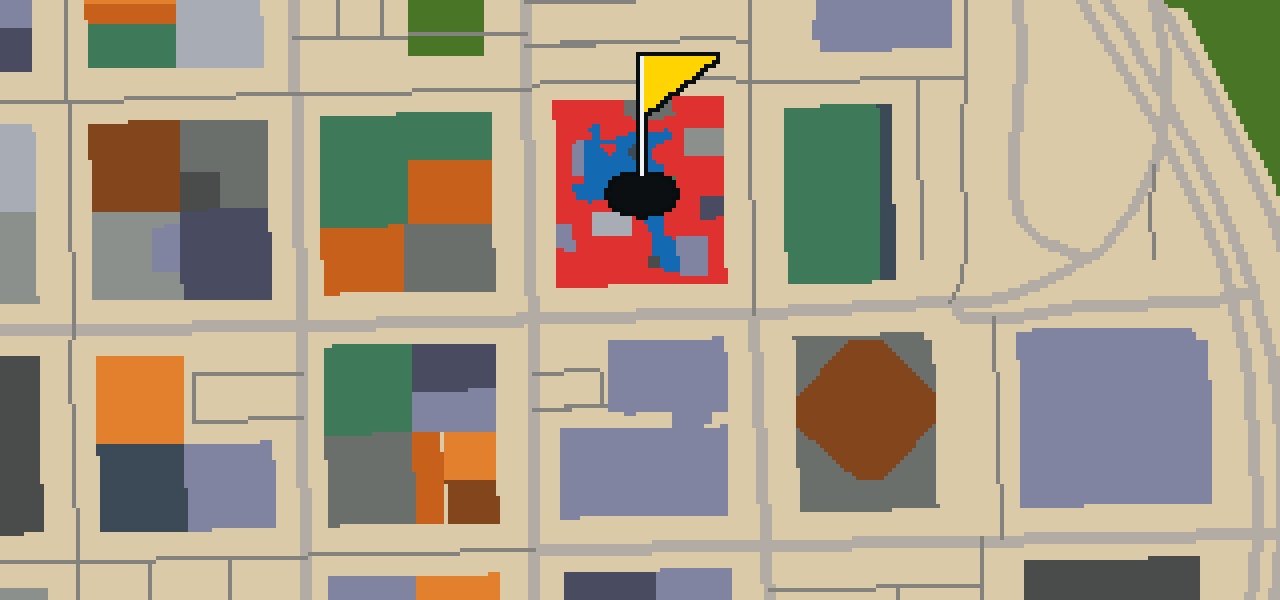
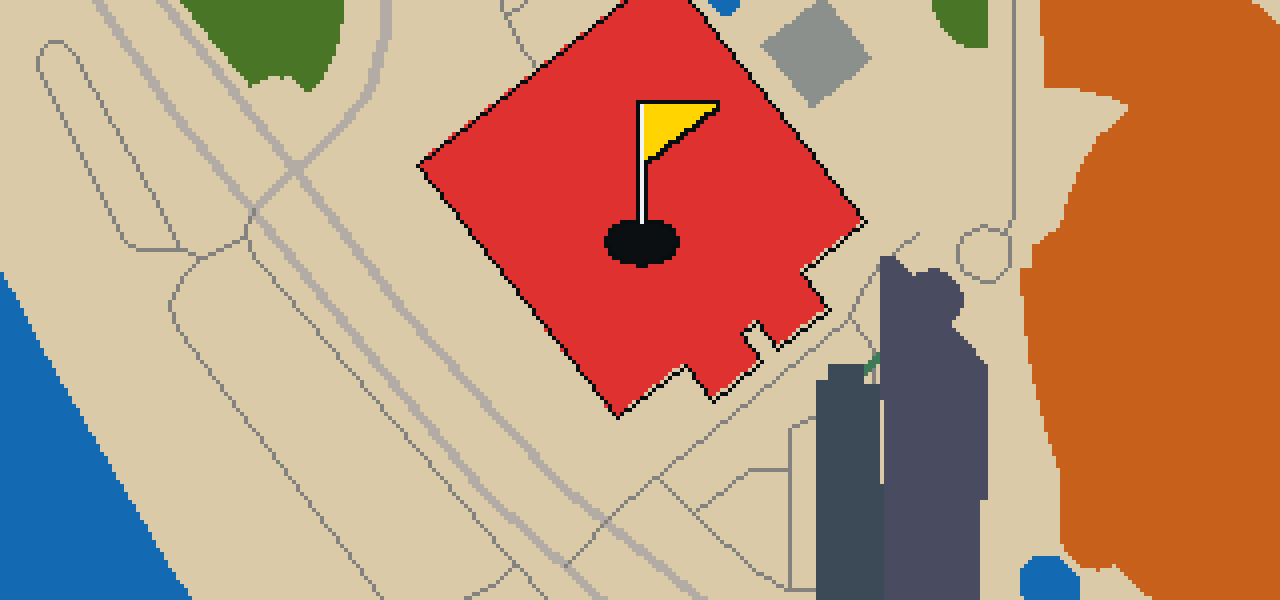
Portland is the setting for this round, where the map follows the real city and the ball rolls across its actual streets. The holes are built from real attractions, starting with the tiny footprint of Mill Ends Park. A full 18-hole round covers 8.1 mi of pavement, providing a long walk through the city center. Skip knows these sidewalks and the best way to bank a shot off a brick facade, having spent plenty of time watching the traffic from the gutters.

Trouble loading? Open the game in its own tab.

HOW IT WORKS

01

Pick a city

The course is drawn on the real street grid, so the map you play is the map you walk.

02

Putt to the pin

Drag to aim, release to swing. Buildings bounce and water costs you a stroke.

03

Sightsee between strokes

Every hole ends at an attraction. Sink the putt, read the story, walk to the next tee.

THE PORTLAND ROUND - STOP BY STOP

HOLE 1 - PAR 3

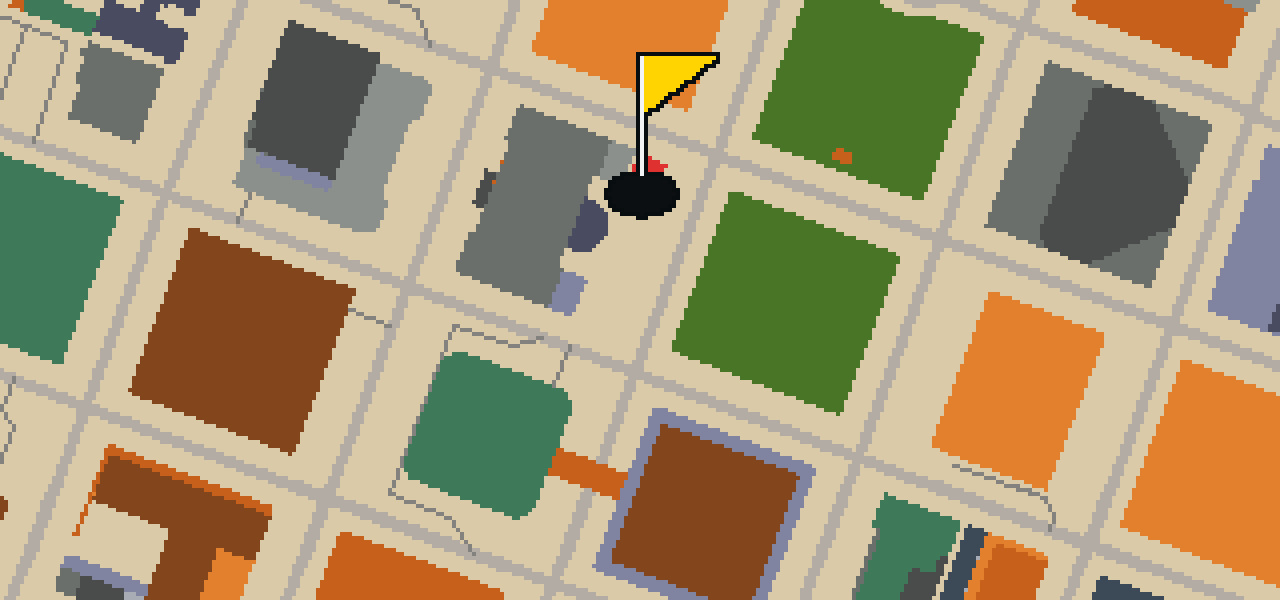
Mill Ends Park

You might miss Mill Ends Park if you aren't looking for it, as it is a small circle only 2 ft across. Established in 1948, this pocket park is the smallest urban park in the United States. It consists of one tree and has a total area of 452 sq in. For a long time, it was known globally for its size; the Guinness Book of Records recognized it as the smallest park in the world in 1971. It held that specific distinction until February 2025. I've seen some small crumbs on the sidewalk larger than this plot of land.

Wikidata · Wikipedia

HOLE 2 - PAR 2

Liberty Bell

Let me show you the Liberty Bell, a sculpture that refers to one of two replicas of the original bell in Philadelphia. This site has a heavy history; the first replica was purchased in 1962 and installed in the City Hall rotunda in 1964. However, that first bell was destroyed in a bomb blast on November 21, 1970. The second replica was dedicated on November 6, 1975. Today, the Oregon Department of Veterans' Affairs lists the bell as a state veterans memorial. I've noticed it's a spot where people tend to pause and reflect.

Wikidata · Wikipedia

HOLE 3 - PAR 4

Portland Art Museum

Founded in 1892, the Portland Art Museum is an art museum and nonprofit organization. The site has grown to 240,000 square feet, with more than 112,000 square feet dedicated to gallery space. Pietro Belluschi is an architect of the museum. It is a popular spot for the public, seeing 445,000 annual visitors. You can find over 42,000 works of art in the permanent collection. I've seen plenty of folks wander in here to get out of the rain, and it is a great place to spend a few hours wandering the halls.

Wikidata · Wikipedia

HOLE 4 - PAR 3

Portland Center Stage at The Armory

Look at the heavy masonry and rounded arches of the Romanesque Revival architecture. This is Portland Center Stage at The Armory, a building designed by architects William Frederick McCaw and Richard H. Martin Jr. Built in 1891, it operates as an arena and organization. You can find two theaters inside this National Guard Armory, which was added to the National Register of Historic Places in 2000. It is a great spot to see how old military structures can be repurposed for the arts.

Wikidata · Wikipedia

HOLE 5 - PAR 4

Saint Mary's Cathedral of the Immaculate Conception

You will first notice the Romanesque Revival architecture of Saint Mary's Cathedral of the Immaculate Conception. This Catholic cathedral in Portland, Oregon, was started in 1925. Joseph Jacobberger was the architect of the building. It is an important site in the city as it is the seat of the Archdiocese of Portland in Oregon. Visitors can appreciate the specific design choices made by Jacobberger when the construction began. This landmark remains a central point of faith and history for the community in the United States.

Wikidata · Wikipedia

HOLE 6 - PAR 3

Oregon Jewish Museum

You can pick out specific artifacts, archival materials, and art throughout the Oregon Jewish Museum. Located in Portland, this Jewish museum is dedicated to the preservation, research, and exhibition of these items related to the Jews and Judaism in Oregon. It is the largest museum dedicated to the documented and visual history of the Jews of Oregon, United States. I've found that the collection provides a clear look at the region's heritage. Let me show you how these pieces tell a broader story of the community.

Wikidata · Wikipedia

HOLE 7 - PAR 3

Director Park

Located on Southwest Park Avenue, Director Park is a nearly half-acre urban park. It is a paved space that lacks any natural areas and contains little vegetation. While it provides a spot to gather downtown, the park covers a 700-space underground parking garage. This garage connects underground to the Park Avenue West Tower and the Fox Tower. I've noticed it's a great spot for people-watching since there aren't many trees to block the view, making it one of the most open spaces in the heart of the city.

Wikidata · Wikipedia

HOLE 8 - PAR 3

Roseland Theater

Located at 8 Northwest Sixth Avenue in the Old Town Chinatown neighborhood, the Roseland Theater is a music venue with a distinct architectural history. The building was originally constructed in 1922 by the Apostolic Faith Church. In 1982, Larry Hurwitz converted the former church into a music venue known as Starry Night. Following an ownership transfer in 1991, the venue was given its current name. During the 1990s, Double Tee acquired control of the hall's operations. You can still see the remnants of its past as a church building within the layout of the current theater.

Wikidata · Wikipedia

HOLE 9 - PAR 3

Lovejoy Columns

Look closely at the paint on these pillars to see the work of Tom Stefopoulos, who painted the columns between 1948 and 1952. Together, they form a mural that originally supported the Lovejoy Ramp. This viaduct carried the western approach to the Broadway Bridge from 1927 to 1999. When the viaduct was demolished in 1999, the architectural group Rigga worked to spare the columns from demolition. For five years following that demolition, the columns remained in storage beneath the Fremont Bridge. I've seen plenty of things tucked away in this city, but these are a special find.

Wikidata · Wikipedia

HOLE 10 - PAR 3

Congregation Beth Israel

Founded in 1928, Congregation Beth Israel is a Reform Jewish congregation and synagogue located at 1931 NW Flanders Street. The structure was designed by architect Morris H. Whitehouse and is built in the Byzantine Revival architecture style. Visitors can observe the unique details of this specific style on the exterior. Due to its historical and architectural significance, the synagogue is a National Register of Historic Places listed place. It remains a central site for its community in Portland, Oregon, in the United States.

Wikidata · Wikipedia

HOLE 11 - PAR 4

Providence Park

This isn't a quiet neighborhood park, but a stadium in the Goose Hollow neighborhood of Portland. Providence Park is an outdoor soccer venue that hosts the Portland Thorns FC of the National Women's Soccer League and the Portland Timbers of Major League Soccer. A. E. Doyle and Morris H. Whitehouse were the architects of the facility, which saw its inception in 1926. I've seen plenty of fans flock here on match days, and the energy is always electric. It is a great place to feel the pulse of the city while watching a game under the open sky.

Wikidata · Wikipedia

HOLE 12 - PAR 3

Arlene Schnitzer Concert Hall

Designed by Rapp and Rapp in the Renaissance Revival architecture style, the Arlene Schnitzer Concert Hall is a National Register of Historic Places listed place. This concert hall in Portland serves as a venue for music and movies. It is currently the home of the Oregon Symphony. When the building first opened in 1927, it was known as the Paramount Theatre. I've always liked how the fancy exterior makes the whole block feel a bit more formal, and it is a great spot to admire the craftsmanship of the facade while you are walking by.

Wikidata · Wikipedia

HOLE 13 - PAR 4

Keller Auditorium

Located on Clay Street in Downtown Portland, Keller Auditorium is a performing arts center and part of Portland's Centers for the Arts. The multi-purpose hall first opened in 1917. While it has a long history, an extensive remodeling and modernization in 1967–68 changed its original exterior appearance beyond recognition. I've seen plenty of changes from the air, but that one was a total transformation. It is a central spot for the city's cultural life, though it looks nothing like it did when it first opened over a century ago.

Wikidata · Wikipedia

HOLE 14 - PAR 4

USS Blueback

The United States Navy operated the USS Blueback, a Barbel-class attack submarine. Started in 1959, this vessel is now a preserved watercraft and a National Register of Historic Places listed place. I can show you where it sits today, as it was made into an exhibit at the Oregon Museum of Science and Industry. It is a great spot to see how these crews lived and worked beneath the waves. You will find it is a tight fit inside, which is exactly how these ships were designed to function while on patrol.

Wikidata · Wikipedia

HOLE 15 - PAR 4

Lovejoy Fountain Park

You might expect a Portland park to be a dense thicket of pines, but Lovejoy Fountain Park is an urban park located right in downtown Portland, Oregon. It is a curated city space designed for public use rather than a wilderness preserve. This particular spot had its inception in 1966, giving visitors a place to pause amidst the surrounding city buildings. I've found it's a great spot to watch the crowds go by while you take a breather and enjoy the open air. It is a welcome change of pace from the busy streets.

Wikidata · Wikipedia

HOLE 16 - PAR 4

Weather Machine

You can find the Weather Machine tucked into a corner of Pioneer Courthouse Square. It is a lumino kinetic bronze sculpture and columnar machine that functions as a weather beacon, displaying a weather prediction every day at noon. The piece was designed and constructed by Omen Design Group Inc. and cost $60,000. When it was installed in 1988, two thousand people showed up for the dedication. I've seen a few confused tourists staring at it, wondering if the forecast is actually right.

Wikidata · Wikipedia

HOLE 17 - PAR 3

Lan Su Chinese Garden

You'll first notice the high walls of Lan Su Chinese Garden, which enclose a full city block in the Chinatown area of the Old Town Chinatown neighborhood. Formerly known as the Portland Classical Chinese Garden, this site is titled the Garden of Awakening Orchids. The garden is influenced by many of the famous classical gardens in Suzhou and covers roughly 40,000 square feet. It's a peaceful spot to wander when you need a break from the downtown noise. I've found the layout makes for a great place to stretch your wings.

Wikidata · Wikipedia

HOLE 18 - PAR 3

Veterans Memorial Coliseum

The Veterans Memorial Coliseum is an indoor arena located in Portland. It is listed on the National Register of Historic Places and is officially recognized as a National Treasure. When you look at the building, you can pick out the clean lines and functional form of the International Style of architecture. I've noticed that the area around here always feels like the heart of the city's sports history, as it has hosted countless events and games. It is a great spot to stop and appreciate how the city's skyline has evolved around this specific landmark.

Wikidata · Wikipedia

STOP 19

Portland Institute for Contemporary Art

You can pick out the gallery space of the Portland Institute for Contemporary Art before seeing the broader reach of the organization. PICA is a contemporary performance and visual arts organization located in Portland, Oregon. Founded in 1995 by Kristy Edmunds, it has spent decades bringing modern creativity to the city. Every September, the organization presents the Time-Based Art Festival, which has been an annual event since 2003. I've noticed that the energy here shifts whenever the festival rolls around.

Wikidata · Wikipedia

OTHER COURSES

9 HOLES - PAR 29

Fayetteville

9 stops

Fayetteville is the setting for this round, where the map is the real city and the ball rolls across its actual streets. The holes are built from real attractions, beginning at the Walton Arts Center. This quick 9-hole round covers 3.6 mi with a par of 29. Skip is a local guide who knows every curb and crack in the pavement.

9 HOLES - PAR 30

Lincoln

9 stops

The ball finds the cup at the Statue of Abraham Lincoln in Lincoln. The map is the real city and the round is played on its real streets, using actual attractions as the holes. This quick 9-hole round covers 4.4 mi with a par of 30. Skip is a local guide who knows these sidewalks well, even the parts where the crumbs are best.

18 HOLES - PAR 55

Duluth

18 stops

This is Duluth. The map is the real city and the round is played on its actual streets, where the ball banks off the facades of real attractions like the SS William A. Irvin to reach the cup. Skip is a local guide who knows every nook and cranny of these sidewalks. It is a full round of 18 holes with a par of 55. The total walk covers 7.1 mi, though a pigeon can take a few shortcuts across the rooftops.

9 HOLES - PAR 29

Traverse City

9 stops

Traverse City is the setting for this quick nine-hole round. The map uses the actual city layout where the ball rolls across real streets and banks off the facades of attractions like the Wise Memorial Clock Tower. Skip knows every ledge and gutter in town. The walk covers 3.8 mi on a course with a par of 29.

9 HOLES - PAR 31

Grand Rapids

9 stops

Banking a ball off the glass and stone of the Van Andel Arena feels different than the soft edges of a park. This round takes place on the real streets of Grand Rapids, where the city map is the course and local attractions are the holes. It is a quick nine-hole round covering 4.4 mi. Skip knows every sidewalk and ledge in this town.

FAQ

Is it free to play?

Yes. Every course runs in the browser with no account and no install.

Do I need to be in the city?

No. The full round plays from anywhere. Walking the real route is a nice way to see the city, but it is not required.

Are the maps real?

Yes. The geometry comes from OpenStreetMap data, rendered chunky on purpose. Streets, water and parks sit where they really are.