
VERSAILLES - 18 HOLES - FREE

VERSAILLES
CITY MAP MINIGOLF

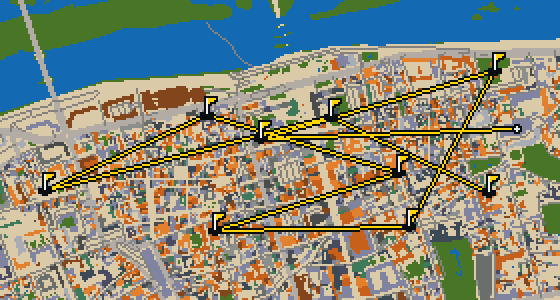
Versailles - 18 stops - par 56

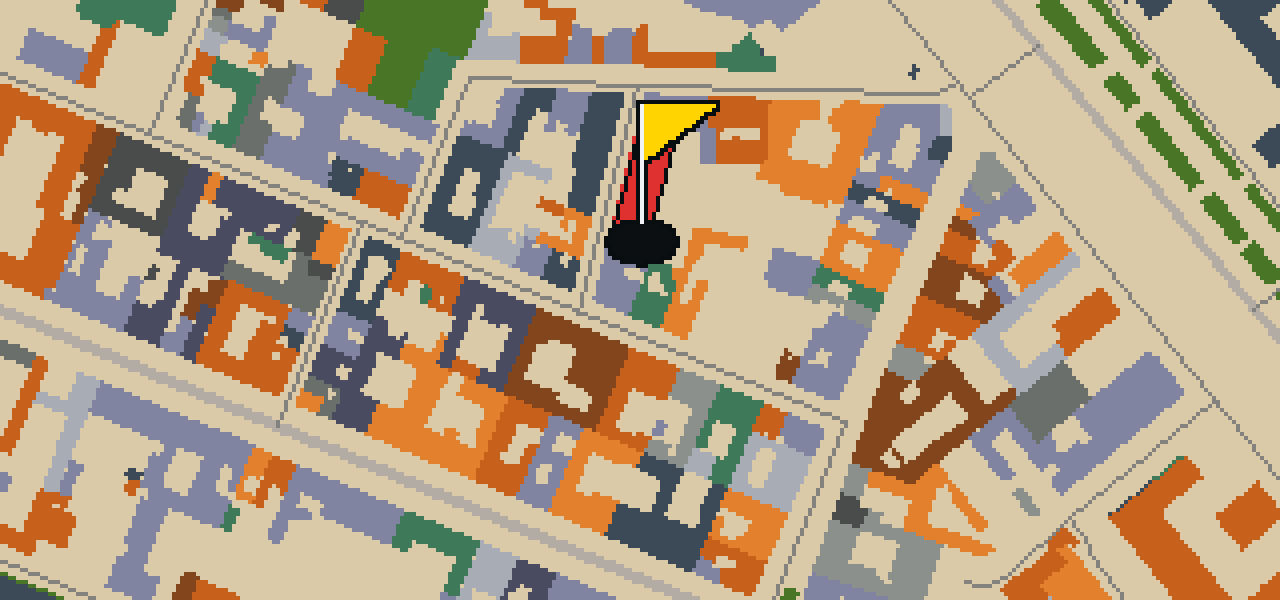
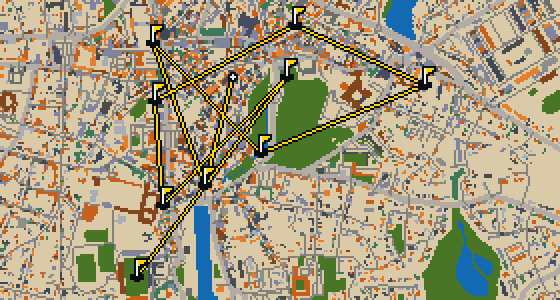
This is Versailles. The map is the real city and the round is played on its real streets, using attractions like the Château de Versailles as the basis for the holes. Skip is a local guide who knows every cobblestone. It is a full round of 18 holes with a par of 56, covering a walk of 11.7 km. The ball uses 6 portals to move between the different districts.

Trouble loading? Open the game in its own tab.

HOW IT WORKS

01

Pick a city

The course is drawn on the real street grid, so the map you play is the map you walk.

02

Putt to the pin

Drag to aim, release to swing. Buildings bounce and water costs you a stroke.

03

Sightsee between strokes

Every hole ends at an attraction. Sink the putt, read the story, walk to the next tee.

THE VERSAILLES ROUND - STOP BY STOP

HOLE 1 - PAR 3

Château de Versailles

You can pick out the grand Neoclassical and French Baroque architecture as soon as you arrive at the Château de Versailles. Located in Versailles in the Yvelines department of France, this royal palace was started in 1661. It is a world-famous art museum and a classified historical monument that attracts 4,741,758 visitors every year. I've noticed the crowds are always buzzing around the gates, though the scale of the place makes room for everyone. It is a sight that really shows off the style of the era.

Wikidata · Wikipedia

HOLE 2 - PAR 3

Galerie des Carrosses

You might expect another gallery of paintings, but this is a history and transport museum. The Galerie des Carrosses is part of the Public Establishment of the Palace, Museum and National Estate of Versailles. Established in 1831, the museum features an array of carriages, mainly from the 19th century. I've found the scale of these vehicles quite impressive when you see them up close. It is located in Versailles, France, and remains a key spot for those interested in how people traveled in the past.

Wikidata · Wikipedia

HOLE 3 - PAR 3

Musée Lambinet

You might expect every museum here to be about the palace, but the Musée Lambinet is a municipal art museum focused on the history of the town itself. Founded in 1932, it is located in the hôtel Lambinet, which the heirs of Victor Lambinet left to the town in 1929. The building has been classed as a monument historique since 1944. I always find the local stories here a refreshing change of pace from the royal crowds, offering a glimpse into the lives of the people who actually lived and worked in the city.

Wikidata · Wikipedia

HOLE 4 - PAR 4

Synagogue de Versailles

The Synagogue de Versailles is a synagogue located at 10, rue Albert Joly in Versailles, within the Yvelines department of the Île-de-France region of France. Established in 1884, the building is recognized as a monument historique inscrit. The architect Alfred-Philibert Aldrophe built the synagogue between 1884 and 1886, and the structure was officially inaugurated in 1886. The establishment of the synagogue was made possible through the significant financial support provided by Mrs Furtado Heine.

Wikidata · Wikipedia

HOLE 5 - PAR 3

Opéra Royal

The interior decoration of the Opéra Royal is constructed almost entirely of wood. To create a more opulent look, Augustin Pajou used a technique known as faux marble to paint these surfaces. This space is the main theatre and opera house of the Palace of Versailles, designed by the architect Ange-Jacques Gabriel. It is a place where the grandeur of the court met the performing arts. I always find it funny how convincingly the wood mimics stone once you are actually inside the room.

Wikidata · Wikipedia

HOLE 6 - PAR 2

Salle du Jeu de Paume

Let me show you the Salle du Jeu de Paume. This site is a jeu de paume building, which is a specific type of sports hall used for an early version of tennis. You can pick out the architectural details that identify it as a classified historical monument. It is a rare example of this kind of building that remains today for people to visit. I've noticed that the high ceilings make for a great place to stretch your wings if you're flying overhead, though I usually stick to the ledges to get a better view of the crowd.

Wikidata

HOLE 7 - PAR 3

Cathédrale Saint-Louis

The classical architecture style defines the exterior of the Cathédrale Saint-Louis. This Roman Catholic church is located in Versailles, France, and is a classified historical monument. It serves as a Catholic cathedral and is also designated as a national monument. Work on the structure started in 1742. Visitors can observe how the classical style shapes the presence of this building in the city. As a national monument, it remains a significant point of interest for those exploring the religious and historical architecture of the region.

Wikidata · Wikipedia

HOLE 8 - PAR 3

Statue équestre de Louis XIV

You will first notice a bronze equestrian statue of the King of France Louis XIV situated on the Place d'Armes in front of the Palace of Versailles. This sculpture was created in 1836 and remains a prominent feature for anyone arriving at the estate. While it currently overlooks the square, the statue was located in the cour d'honneur until 2008–2009. I always think it looks quite regal against the palace backdrop, though you have to keep an eye out for us pigeons landing on the bronze. It is a great spot to pause and take in the scale of the surrounding architecture.

Wikidata · Wikipedia

HOLE 9 - PAR 4

Le Potager du Roi

Jean-Baptiste de La Quintinie created Le Potager du Roi between 1678 and 1683. This garden in Versailles produced fresh vegetables and fruits for the table of the court of Louis XIV. I always find it impressive how much effort went into keeping a royal menu fresh. Today, the École nationale supérieure du paysage runs the grounds, maintaining the site's legacy. Whether you are a fan of botany or history, the layout of this space is worth a look. It is a great spot to see how royal gardening worked in the past.

Wikidata · Wikipedia

HOLE 10 - PAR 4

Le jardin de Versailles

Le jardin de Versailles is a French formal garden that was started in 1624. It occupies part of what was once the Domaine royal de Versailles and is now a World Heritage Site and a classified historical monument. You can see how André Le Nôtre perfected the classic French formal garden style across the 800 ha of land. I've found that the scale of the greenery is quite a change from the palace rooftops, providing a wide open view of the horizon.

Wikidata · Wikipedia

HOLE 11 - PAR 3

Parc de Versailles

Let me show you the Parc de Versailles. This park was created by the French monarchy to be a grand extension of their residence. It is a classified historical monument and is recognized as a World Heritage Site. You can pick out the immense scale of the greenery and the formal layouts that define the area. I've found that the wide open spaces are a great place to stretch your wings, provided the gardeners aren't looking. It is a wonderful place to walk and see how the landscape was shaped for the crown.

Wikidata

HOLE 13 - PAR 3

Grotte

The Grotte is a maison de plaisance located in Versailles. This site is a notable example of the Classicism style, which you can see in the structured lines and balanced proportions of the building. It was designed by the architect Ange-Jacques Gabriel, and work on the project was started in 1762. I always find the clean aesthetic of this era a nice change of pace from the more ornate parts of the city. It is a great spot to pause and appreciate the architectural restraint that defines this particular style of building.

Wikidata · Wikipedia

HOLE 14 - PAR 3

Porte Saint-Antoine

Porte Saint-Antoine is a maison de plaisance. When you look at the building, you can pick out the specific details of the Classicism style, which gives the structure its balanced and formal appearance. The building was designed by the architect Ange-Jacques Gabriel and its inception was in 1762. It is a great example of the architectural tastes of the era. I have found that the smooth facades of these classic buildings make for some of the most predictable bank shots on the entire course.

Wikidata · Wikipedia

HOLE 15 - PAR 3

Solitude

Let me show you Solitude, a maison de plaisance located in Versailles. This building is designed in the Classicism style and was started in 1762. Ange-Jacques Gabriel was the architect who created this space. It is a fine example of how the Classicism style was used for a pleasure house, focusing on symmetry and proportion. I have noticed the lines of the building are quite sharp from where I perch on the nearby eaves, making it a very tidy target for a golf ball to bank off of before it holes out.

Wikidata · Wikipedia

HOLE 16 - PAR 3

Ancienne Ménagerie

The Ancienne Ménagerie is a maison de plaisance designed in the Classicism style. I can show you the work of architect Ange-Jacques Gabriel, who was responsible for the design of this building. The inception of the site was in 1762. It is a spot where you can appreciate the structured elegance of the era. I usually find the symmetry of these old royal retreats quite relaxing to look at from a high ledge, and you can pick out those same clean lines from the street level.

Wikidata · Wikipedia

HOLE 17 - PAR 3

La Maison du Billard

Don't let the name fool you; this isn't a sports hall, but an ornamental farm. Located in Versailles, La Maison du Billard was started in 1783 and designed by the architect Richard Mique. It is part of a village that has the Queen's House at its center. If you look closely, you can see a wooden gallery that connects the Billiard house to the Queen's House. I've always found the layout of these little buildings quite charming, and the way they are linked together makes the whole area feel like a secluded getaway from the main palace.

Wikidata · Wikipedia

HOLE 18 - PAR 4

Temple de l’Église de Jésus-Christ des Saints des derniers jours

The Temple de l’Église de Jésus-Christ des Saints des derniers jours is a temple located in Versailles. The temple was officially announced on October 1, 2011, by church president Thomas S. Monson during general conference. Following this announcement, the inception of the Temple de l’Église de Jésus-Christ des Saints des derniers jours occurred in 2017. Visitors to the site can observe that the building is designed in the style of modern architecture.

Wikidata · Wikipedia

STOP 19

Jardin anglais

Look at the precise lines of the Classicism style before you take in the whole Jardin anglais. This maison de plaisance was started in 1762 and was designed by architect Ange-Jacques Gabriel. It sits in a city known for its royal scale, offering a different kind of charm than the main palace. I've always found that the layout here makes for a great bank shot if you're aiming for the hole, provided you can keep the ball from drifting into the greenery. It is a refined spot that shows off the formal tastes of the era.

Wikidata · Wikipedia

OTHER COURSES

9 HOLES - PAR 24

Le Havre

9 stops

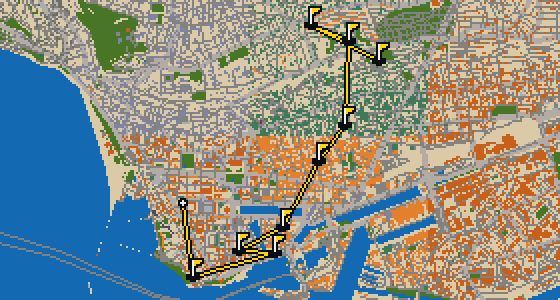
This is Le Havre. The map is the actual city and the round is played on its real streets, using attractions like Église Saint-Joseph as the basis for the holes. Skip is a local guide who knows every corner. It is a quick round of 9 holes with a par of 24, covering a walk of 5.1 km and using 8 portals to move between districts.

9 HOLES - PAR 26

Vannes

9 stops

A quick nine-hole round winds through Vannes, following the real city map and its actual streets. The course uses local attractions, such as Cathédrale Saint-Pierre, to form the holes. Skip knows every corner of this 4.8 km walk, including the two portals that skip over the long stretches. A pigeon's eye view is the best way to see how the ball rolls.

9 HOLES - PAR 28

Tours

9 stops

This is Tours, where the map is the real city and the round is played on its real streets. The holes are built from real attractions, like the Cathédrale Saint-Gatien. Skip is a local guide who knows the place. It is a quick round of 9 holes with a par of 28, covering a 5.5 km walk with two portals for the ball to ride.

9 HOLES - PAR 27

Toulon

9 stops

This is a quick nine-hole round through Toulon. The map is the real city and the play happens on its actual streets, using attractions like the Opéra as the basis for the holes. Skip knows these sidewalks well and will act as the local guide for the 5.2 km walk. Six portals help move the ball across the city.

9 HOLES - PAR 26

Saint-Malo

9 stops

Saint-Malo is the setting for this round, played on the actual streets of the city. Real attractions like the Tour Solidor form the holes, with the map mirroring the physical layout. I know these corners well, having spent plenty of time dodging tourists for crumbs. This quick 9-hole round covers 5.6 km and uses 6 portals to move the ball across the map.

FAQ

Is it free to play?

Yes. Every course runs in the browser with no account and no install.

Do I need to be in the city?

No. The full round plays from anywhere. Walking the real route is a nice way to see the city, but it is not required.

Are the maps real?

Yes. The geometry comes from OpenStreetMap data, rendered chunky on purpose. Streets, water and parks sit where they really are.