
SAINT-MALO - 9 HOLES - FREE

SAINT-MALO
CITY MAP MINIGOLF

Saint-Malo - 9 stops - par 26

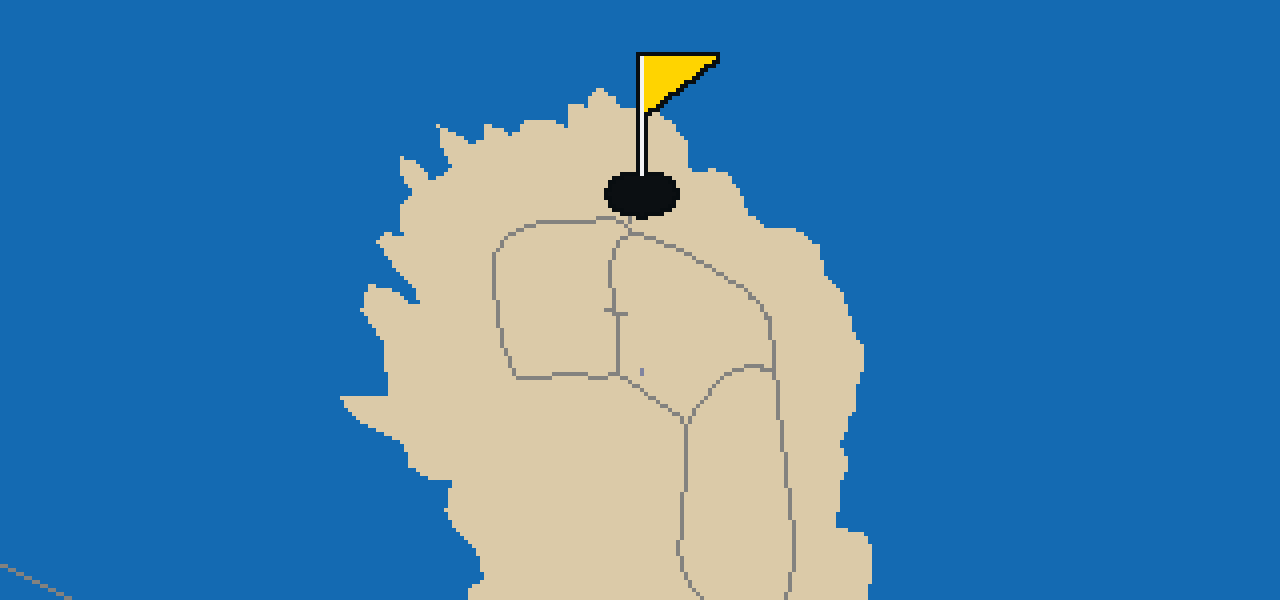
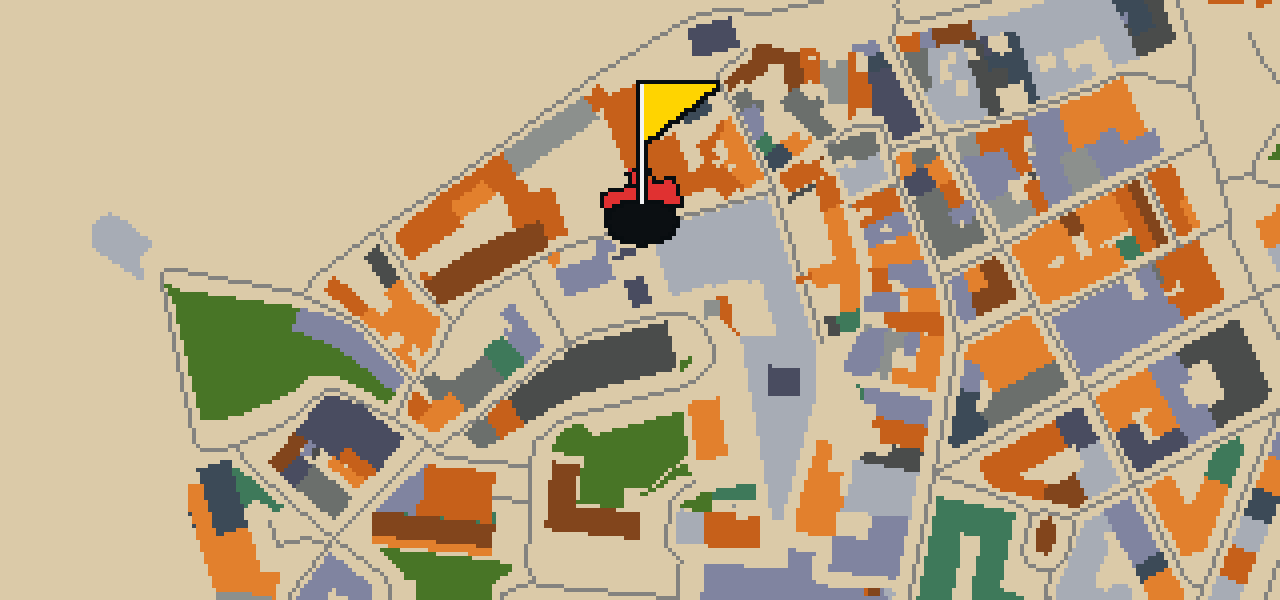
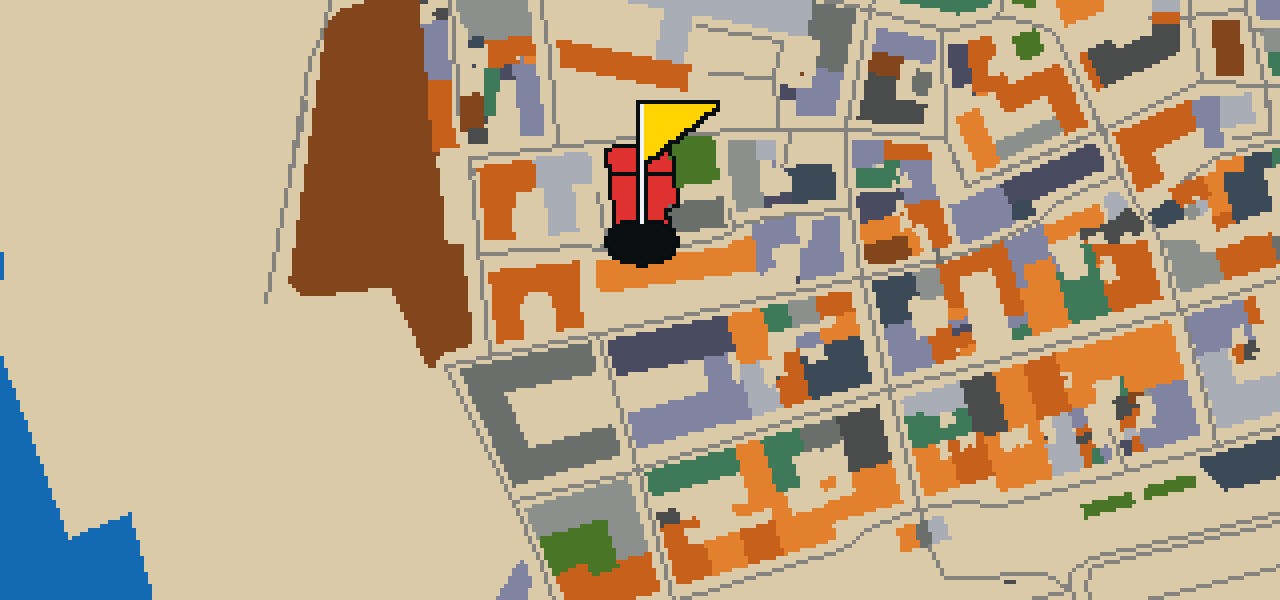
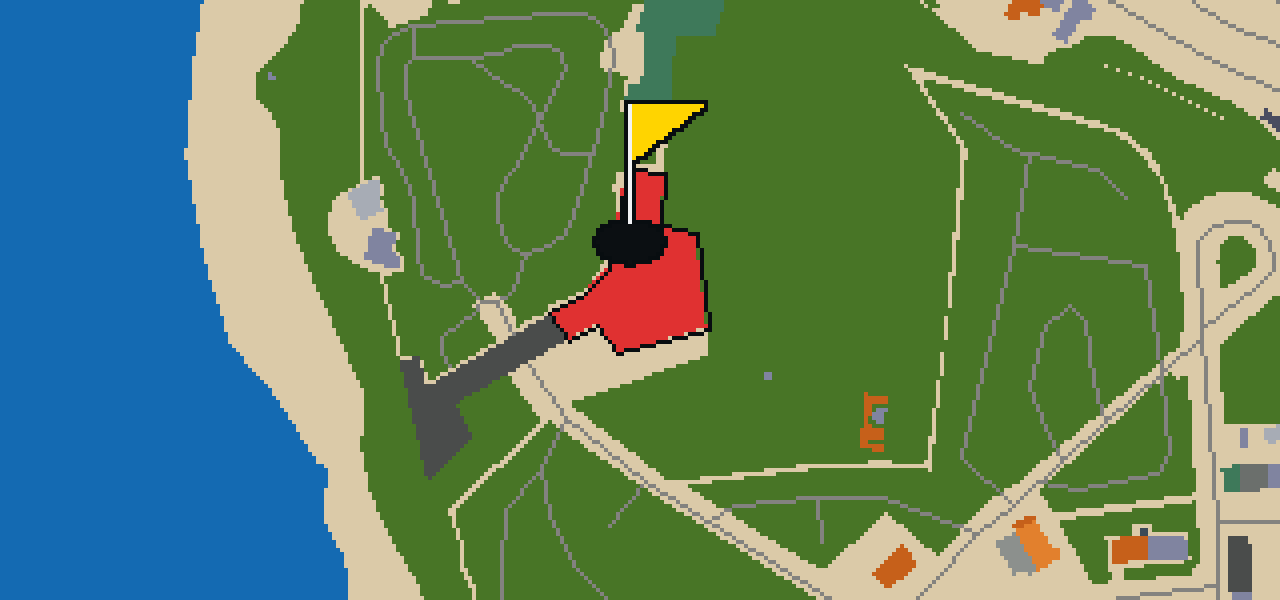
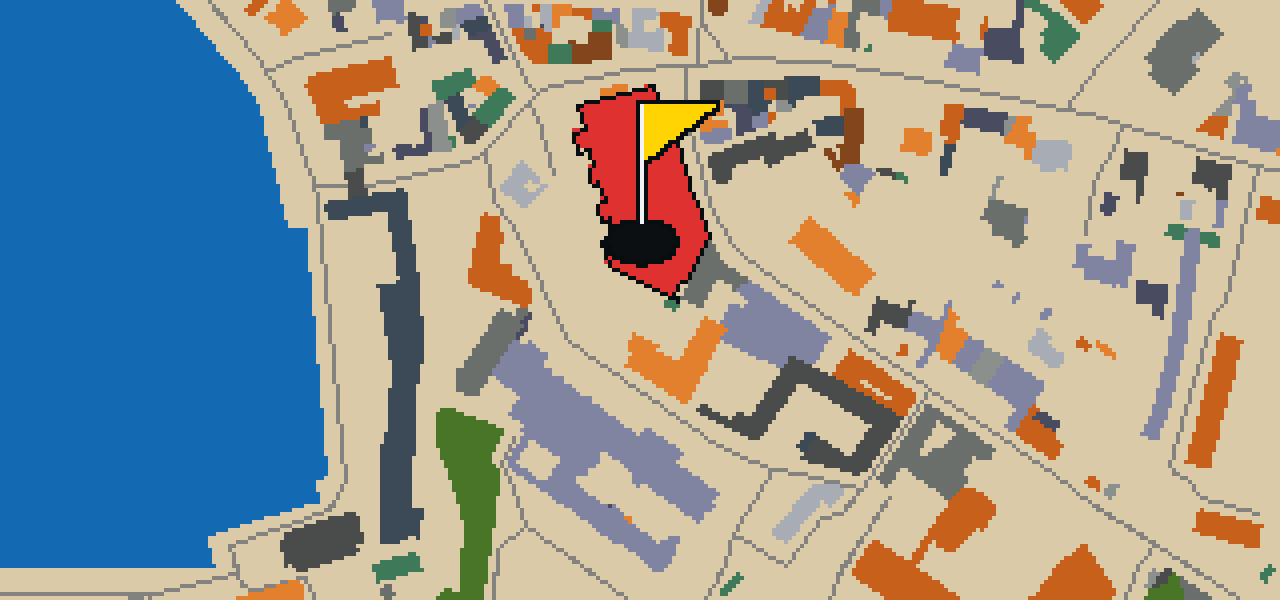
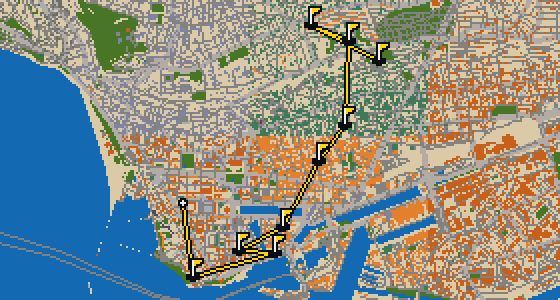
Saint-Malo is the setting for this round, played on the actual streets of the city. Real attractions like the Tour Solidor form the holes, with the map mirroring the physical layout. I know these corners well, having spent plenty of time dodging tourists for crumbs. This quick 9-hole round covers 5.6 km and uses 6 portals to move the ball across the map.

Trouble loading? Open the game in its own tab.

HOW IT WORKS

01

Pick a city

The course is drawn on the real street grid, so the map you play is the map you walk.

02

Putt to the pin

Drag to aim, release to swing. Buildings bounce and water costs you a stroke.

03

Sightsee between strokes

Every hole ends at an attraction. Sink the putt, read the story, walk to the next tee.

THE SAINT-MALO ROUND - STOP BY STOP

HOLE 1 - PAR 3

Cathédrale Saint-Vincent

The restoration of this Catholic cathedral was celebrated with a ceremony on 21 May 1972. Located in Saint-Malo, Brittany, France, Cathédrale Saint-Vincent was founded in dedication to Saint Vincent of Saragossa. The inception of the cathedral was in 1108, and it was built on the site of an ancient church founded in the 7th century. Much of the construction took place during the episcopacy of Jean de Châtillon from 1146 to 1163. While the building stands today, some of its history was lost, such as an organ built in 1893 by Louis Debierre which was destroyed. This site remains a significant landmark of the city's religious history and architecture, reflecting centuries of endurance and renewal within the walls of Saint-Malo.

Wikidata · Wikipedia

HOLE 3 - PAR 3

Château de Saint-Malo

Look toward the northeast corner of the walled city to find the Château de Saint-Malo. This castle is an historic building located in Saint-Malo, Ille-et-Vilaine, in western France. Its inception was in 1424, making it a long-standing fixture of the local skyline. It is a significant landmark that the French government designated a monument historique in 1886. You can also hear it referred to as the Château de la Duchesse Anne. I have spent plenty of time gliding over these ramparts, and I can tell you that the architecture here provides a great sense of the city's old defenses. Whether you are interested in the military history of the region or just want to see a well-preserved fortress, this site is a primary point of interest for anyone visiting the walled city.

Wikidata · Wikipedia

HOLE 4 - PAR 2

Tombeau de François René de Chateaubriand

Wikidata

HOLE 5 - PAR 4

Fort du Petit Bé

Let me show you Fort du Petit Bé. This fort is situated on a tidal island near the city of Saint-Malo, France. It is a classified historical monument that stands as a key piece of the local coastline. If you time your visit for low tide, you can walk to the island from the nearby Bon-Secours beach. While you are out there, you can also pick out the larger island of Grand Bé nearby. I usually keep a close eye on the tide levels myself, as getting stranded on a rock is a bit too much excitement even for a pigeon. It is a wonderful spot to observe how the sea changes the layout of the land throughout the day, provided you keep a sharp eye on the clock and the waterline.

Wikidata · Wikipedia

HOLE 6 - PAR 2

Chapelle Notre-Dame de la Victoire

You will first notice the Chapelle Notre-Dame de la Victoire, which is a school building. It is a site that holds official recognition as a monument historique inscrit. If you look closely at the structure, you can see why it is also a classified historical monument. I find it interesting how the building blends its educational purpose with its status as a protected piece of the city's heritage. Whether you are here for the architecture or just passing through, it is a distinct point of interest in Saint-Malo. It is always a pleasure to show visitors these spots where the city's official history lives on through the daily routines of students and teachers in a protected setting.

Wikidata

HOLE 7 - PAR 4

Chapelle Saint-Sauveur

Chapelle Saint-Sauveur is a church building that was started in 1743. Located in Saint-Malo, the structure was designed by the architect Siméon Garangeau. It is a site that allows you to see the architectural style of the period in which it was founded. Since its early construction, the building has been granted a specific status of protection and importance. It is now officially designated as a monument historique inscrit. This recognition ensures that the church is maintained and preserved as a piece of the city's heritage. When you visit, you can observe the details of the design attributed to Garangeau and reflect on the history of the site from the mid-eighteenth century to the present day.

Wikidata

HOLE 8 - PAR 3

Mémorial 1939-1945

Wikidata

HOLE 9 - PAR 3

Tour Solidor

You might expect a single spire, but Tour Solidor is actually a castle composed of a strengthened keep with three linked towers. I can show you where it sits in the estuary of the river Rance in Brittany. It is a fortified tower and a keep that has been recognized as a classified historical monument. This structure is a sturdy piece of history that looks out over the water, providing a different perspective than the main city walls. It is the kind of place where you can really feel the weight of the stone and the scale of the old fortifications. I usually find the river breeze quite refreshing when I am perched nearby, watching the tide come in and out of the estuary.

Wikidata · Wikipedia

STOP 10

Église Sainte-Croix

Église Sainte-Croix is a church building. It is designed in the classical architecture style and is recognized as a monument historique inscrit. This site is the result of work by several architects, including Amédée-François Frézier, Jean Datour, and Siméon Garangeau. When you look at the building, you can see how these architects shaped the physical presence of the church within the city. The classical style is a primary feature of the exterior and interior, making it a significant point of interest for those observing the local architecture. As you move through the streets of Saint-Malo, this building stands as a testament to the collaborative efforts of Frézier, Datour, and Garangeau. It remains an important piece of the city's built environment, combining the specific goals of its multiple architects with the formal requirements of the classical tradition.

Wikidata

OTHER COURSES

9 HOLES - PAR 24

Le Havre

9 stops

This is Le Havre. The map is the actual city and the round is played on its real streets, using attractions like Église Saint-Joseph as the basis for the holes. Skip is a local guide who knows every corner. It is a quick round of 9 holes with a par of 24, covering a walk of 5.1 km and using 8 portals to move between districts.

18 HOLES - PAR 56

Versailles

18 stops

This is Versailles. The map is the real city and the round is played on its real streets, using attractions like the Château de Versailles as the basis for the holes. Skip is a local guide who knows every cobblestone. It is a full round of 18 holes with a par of 56, covering a walk of 11.7 km. The ball uses 6 portals to move between the different districts.

9 HOLES - PAR 26

Vannes

9 stops

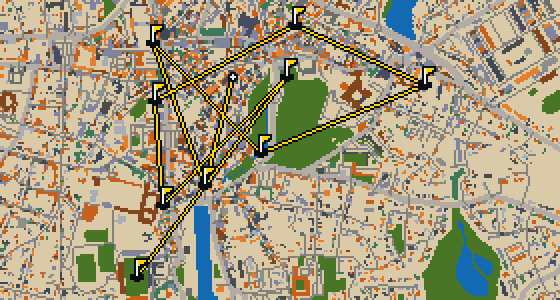
A quick nine-hole round winds through Vannes, following the real city map and its actual streets. The course uses local attractions, such as Cathédrale Saint-Pierre, to form the holes. Skip knows every corner of this 4.8 km walk, including the two portals that skip over the long stretches. A pigeon's eye view is the best way to see how the ball rolls.

9 HOLES - PAR 28

Tours

9 stops

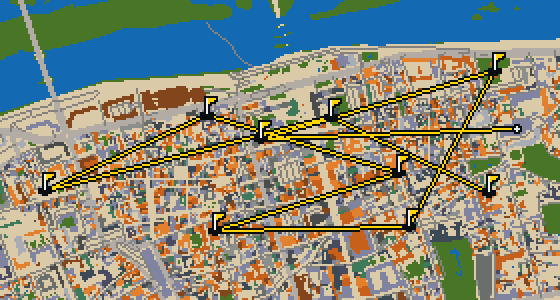
This is Tours, where the map is the real city and the round is played on its real streets. The holes are built from real attractions, like the Cathédrale Saint-Gatien. Skip is a local guide who knows the place. It is a quick round of 9 holes with a par of 28, covering a 5.5 km walk with two portals for the ball to ride.

9 HOLES - PAR 27

Toulon

9 stops

This is a quick nine-hole round through Toulon. The map is the real city and the play happens on its actual streets, using attractions like the Opéra as the basis for the holes. Skip knows these sidewalks well and will act as the local guide for the 5.2 km walk. Six portals help move the ball across the city.

FAQ

Is it free to play?

Yes. Every course runs in the browser with no account and no install.

Do I need to be in the city?

No. The full round plays from anywhere. Walking the real route is a nice way to see the city, but it is not required.

Are the maps real?

Yes. The geometry comes from OpenStreetMap data, rendered chunky on purpose. Streets, water and parks sit where they really are.