
PARMA - 18 HOLES - FREE

PARMA
CITY MAP MINIGOLF

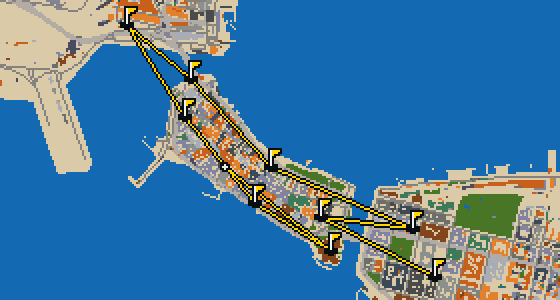
Parma - 18 stops - par 55

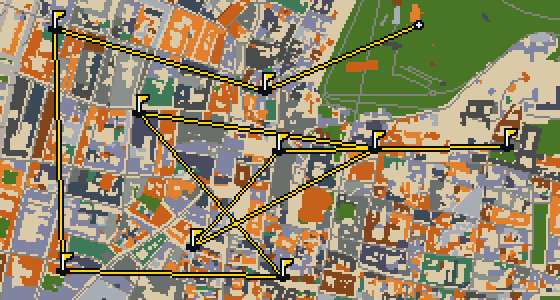
This is Parma, where the map is the real city and the round is played on its actual streets. The holes are built from real attractions, ending the walk at the Torrione Visconteo. Skip is a local guide who knows the place and where the best crumbs are hidden. A full round of 18 holes takes a 10.5 km walk with a par of 55, using four portals to bridge the gaps.

Trouble loading? Open the game in its own tab.

HOW IT WORKS

01

Pick a city

The course is drawn on the real street grid, so the map you play is the map you walk.

02

Putt to the pin

Drag to aim, release to swing. Buildings bounce and water costs you a stroke.

03

Sightsee between strokes

Every hole ends at an attraction. Sink the putt, read the story, walk to the next tee.

THE PARMA ROUND - STOP BY STOP

HOLE 1 - PAR 3

Stadio Ennio Tardini

Let me show you Stadio Ennio Tardini, which takes its name from one of Parma's former presidents. This stadium is the home of Parma Calcio 1913 and is the nineteenth largest football stadium in Italy. If you are looking for a bit of history, you can pick out the age of the place; it was built in 1923 and is the sixth oldest Italian football ground still in use. It is also the second largest stadium in Emilia–Romagna, with a capacity of 22,352 spectators. I've noticed the crowds here can get quite loud.

Wikidata · Wikipedia

HOLE 2 - PAR 3

Cittadella

You will first notice the distinct five-sided shape of the Cittadella, a pentagonal fortress located in Parma. Built in the last years of the 16th century, it is a prime example of the Renaissance architecture style. Today, this site is an Italian national heritage location that also functions as a public park. I find the geometric layout of the walls quite striking from the air, though you can appreciate the scale just as well on foot. It is a peaceful spot to walk and admire the old defenses of the city.

Wikidata · Wikipedia

HOLE 3 - PAR 4

Museo d'Arte Cinese ed Etnografico

You can pick out the specific displays that make the Museo d'Arte Cinese ed Etnografico an art museum. This site is recognized as Italian national heritage and operates as a private museum. It also functions as an ethnographic museum, providing a focused look at global cultures for anyone visiting the area. I've noticed it stays relatively quiet compared to the main squares and the bustling crowds of the city center, as it sees 4,000 annual visitors. It is a steady, calm spot to spend an afternoon if you want to avoid the heavier tourist traffic.

Wikidata

HOLE 4 - PAR 3

Teatro Due

Let me show you Teatro Due. This theatre building is a notable example of rationalism, a style that emphasizes geometric purity and a lack of unnecessary ornament. When you look at the structure, you can pick out the functional forms and the stripped-back aesthetic that define this architectural movement. It is a place where the focus is entirely on the utility and the shape of the space itself. I find the starkness of the building quite striking when you first walk up to it, as it stands out from the more traditional facades nearby.

Wikidata

HOLE 5 - PAR 3

Teatro Regio

Let me show you Teatro Regio, an opera house that began its inception in 1829. Designed by architect Nicola Bettoli, the building is a prime example of the Neoclassical architecture style. It was originally constructed as the Nuovo Teatro Ducale and now houses an opera company in Parma. You can pick out the refined lines of the facade, which is designated as Italian national heritage. I've noticed the crowds always seem to linger here, perhaps waiting for the music to start.

Wikidata · Wikipedia

HOLE 6 - PAR 3

Archivio di Stato

Located in the heart of the city, the Archivio di Stato is the state archival institution in Parma. It is recognized as Italian national heritage and functions as a State Archive. This site is important because it preserves historical records produced by public offices and institutions in the city and province. To keep these records organized, the institution forms part of the network of state archives administered by the Italian Ministry of Culture. I've always found the quiet of these halls a nice break from the street noise.

Wikidata · Wikipedia

HOLE 7 - PAR 3

Palazzo del Giardino

You can find the Palazzo del Giardino located within the Parco Ducale in Parma. This palace is a piece of Italian national heritage that displays both Baroque and Neoclassical architecture styles. Giacomo Barozzi da Vignola and Ennemond Alexandre Petitot are architects of the building. It is a great spot to pause and look at the facade while you are wandering through the greenery. I find the shift between the two different architectural styles quite striking, and it makes for a lovely landmark to aim for while you are navigating the park's paths.

Wikidata · Wikipedia

HOLE 8 - PAR 3

Monumento a Vittorio Bottego

HOLE 9 - PAR 3

Camera della Badessa

The Camera della Badessa is a cycle of frescoes and a museum in Parma, northern Italy. You can find this room in the former Monastery of San Paolo, where Correggio painted the vault and the area over the fireplace. The room has a height of 7 meters, and the vault measures 697x645 cm. This site is Italian national heritage and dates back to its inception in 1518. I've noticed the colors stay bright even when the light shifts in the room.

Wikidata · Wikipedia

HOLE 10 - PAR 3

Casa natale di Arturo Toscanini

Step inside the rooms of this house to see where Arturo Toscanini began his life. This historic house museum is recognized as Italian national heritage, preserving the atmosphere of the home for visitors. Today, the site functions as a history museum and a museum of a public entity. It remains a quiet spot in the city, welcoming 1,742 annual visitors who come to see the interior. I've noticed that the neighborhood around here has a very different pace than the main squares, making it a nice place to pause and look around.

Wikidata

HOLE 11 - PAR 3

Cattedrale di Santa Maria Assunta

Benedetto Antelami is the architect of the Cattedrale di Santa Maria Assunta. This Catholic cathedral is an Italian national heritage site that features both Romanesque and Renaissance architecture. It is the episcopal seat of the Diocese of Parma and is also a minor basilica. The cathedral is dedicated to the Assumption of the Blessed Virgin Mary. You can pick out the distinct blend of styles used throughout the structure, marking its place as a significant religious site in the city.

Wikidata · Wikipedia

HOLE 12 - PAR 3

Monumento alla Vittoria

Monumento alla Vittoria is a victory column and a World War I memorial. Work on the monument started in 1931, and the finished structure reaches a height of 23 meters. It stands as a significant point of remembrance in the city. Because of its historical and cultural importance, the site is officially designated as Italian national heritage. You can observe the scale of the column from the surrounding streets, which provides a sense of the monument's presence within the urban environment.

Wikidata

HOLE 13 - PAR 3

Resti del ponte romano

You might expect a complete bridge when you arrive, but you will find the Resti del ponte romano instead. This is an archaeological site featuring the remains of a Roman bridge. It is an ancient Roman structure that allows you to see the engineering of the past. Because it is Italian national heritage, the site is preserved for everyone to visit. I find it a great spot to stop and think about how the city used to look long before my ancestors were flying over these streets.

Wikidata

HOLE 14 - PAR 3

Chiesa di Santa Cristina

The baroque architecture style defines the facade of Chiesa di Santa Cristina. Located on via Repubblica in Parma, within the region of Emilia-Romagna, Italy, this Roman Catholic church is a piece of Italian national heritage. The inception of the building was in 1707, and it was designed by the architect Pietro Caracciolo. Visitors to the city can find this site in the region of Emilia-Romagna, where the building remains a prominent example of the baroque style and a recognized part of the national heritage of Italy.

Wikidata · Wikipedia

HOLE 15 - PAR 3

Chiesa di San Francesco del Prato

San Francesco del Prato is a Roman Catholic church located on Piazzale San Francesco #4 in central Parma, Italy. This church building is constructed in the Gothic architecture style and is officially designated as an Italian national heritage site. It is a place of significant history and faith within the city center. When you arrive at the plaza, you can pick out the 15th-century Palazzo Cusani, which stands in front of the church. This pairing of the Gothic church and the older palace provides a clear look at the architectural history of the surrounding neighborhood.

Wikidata · Wikipedia

HOLE 16 - PAR 3

Chiesa di San Vitale

Luca Reti was the architect of Chiesa di San Vitale. This Roman Catholic church building is located in central Parma, within the Emilia Romagna region of Italy. Built in the baroque architecture style, the inception of the church was in 1651. It is an Italian national heritage site. If you are exploring the city center, you can find the building standing just east of the Piazza Garibaldi and the Palazzo del Comune. It is a significant example of the baroque style in the region.

Wikidata · Wikipedia

HOLE 17 - PAR 3

Teatro Farnese

Let me show you Teatro Farnese, a Renaissance theatre located in the Palazzo della Pilotta. Built in 1618 by Giovanni Battista Aleotti, the building is a prime example of Mannerist architecture and is recognized as Italian national heritage. It was originally part of the Ducal Palace of Parma complex. While it stands tall now, the theatre was almost destroyed by an Allied air raid in 1944 during World War II. It was later rebuilt and reopened in 1962. I've always found the scale of the place impressive, even from a bird's eye view.

Wikidata · Wikipedia

HOLE 18 - PAR 3

Chiesa di San Rocco

Notice the baroque architecture style of the Chiesa di San Rocco. This church building is a Roman Catholic church dedicated to Saint Roch in Parma. It is recognized as an Italian national heritage. Tommaso Blandino and Edelberto dalla Nave were architects of the site, which had its inception in 1737. The building is a key example of the period's design and serves as a point of historical interest for visitors exploring the religious sites of the city.

Wikidata · Wikipedia

STOP 19

Torrione Visconteo

Let me show you Torrione Visconteo. This military building is a prominent part of the city's layout and stands as a tower. It is officially recognized as an Italian national heritage, which means it is a protected site of importance. I've found the surrounding area is a great spot to get your bearings and enjoy the view before moving on to the next landmark on your route. It is a sturdy example of the city's old defenses that you can still see today while exploring the local neighborhood.

Wikidata

OTHER COURSES

9 HOLES - PAR 26

Reggio Emilia

9 stops

Reggio nell'Emilia is the setting for this round, where the map is the actual city and the ball rolls along its real streets. The holes are built from local attractions, including the Cattedrale di Santa Maria Assunta. Skip knows these blocks well. This quick 9-hole round covers a 5 km walk with a total par of 26.

9 HOLES - PAR 26

Modena

9 stops

From a rooftop perch, Modena looks like a clean slate for a quick nine-hole round. The map is the real city and the ball rolls across its actual streets, using attractions like the Duomo di Modena as the holes. Two portals help skip the long stretches of a 4.8 km walk. Skip knows these alleys well and will be the local guide.

9 HOLES - PAR 26

Brescia

9 stops

Brescia is the setting for this round, with the ball rolling across the real streets of the city. The holes are built from actual attractions, including the Castello di Brescia. This quick 9-hole round covers 4.9 km and uses 16 portals to move between districts. Skip knows these pavements well and is the local guide.

9 HOLES - PAR 27

Reggio Calabria

9 stops

Reggio di Calabria is the setting for this round, where the map follows the real city and the ball rolls across its actual streets. Real attractions like the Castello Aragonese provide the architecture for the holes. This is a quick nine-hole round covering a 5.6 km walk. I know these sidewalks well and will act as the local guide.

9 HOLES - PAR 24

Taranto

9 stops

Taranto is the setting for this round, played on the actual streets of the city. The course uses real attractions like the Duomo di San Cataldo as the basis for its holes. This quick 9-hole round covers 4.5 km, and Skip knows every nook of these quarters. A few crumbs later, the ball rolls through the heart of the city to reach the final cup.

FAQ

Is it free to play?

Yes. Every course runs in the browser with no account and no install.

Do I need to be in the city?

No. The full round plays from anywhere. Walking the real route is a nice way to see the city, but it is not required.

Are the maps real?

Yes. The geometry comes from OpenStreetMap data, rendered chunky on purpose. Streets, water and parks sit where they really are.