TURKU - 18 HOLES - FREE

TURKU
CITY MAP MINIGOLF

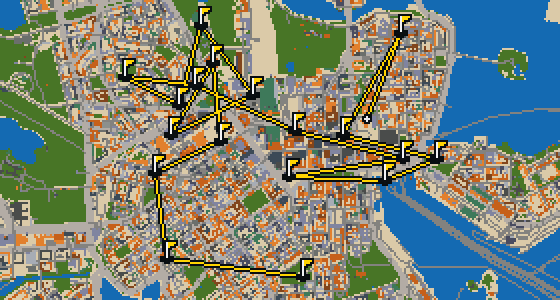
Turku - 18 stops - par 52

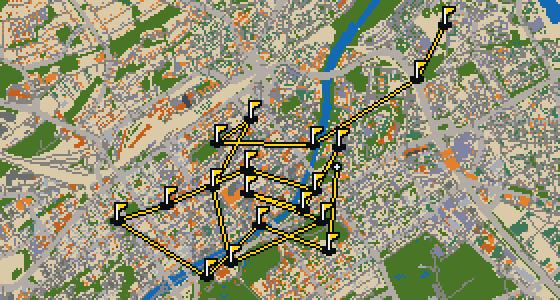
Turku is the setting for this round, where the map follows the actual city layout and the ball rolls along its real streets. The course is built from genuine attractions, using landmarks like Turun tuomiokirkko to form the holes. A full 18-hole round covers 10.6 km, and 30 portals provide quick transit between the distant parts of the map. Skip knows these pavements well, including the exact spots where the best crumbs land. This local guide has a bird's-eye view of every corner of the city.

Trouble loading? Open the game in its own tab.

HOW IT WORKS

01

Pick a city

The course is drawn on the real street grid, so the map you play is the map you walk.

02

Putt to the pin

Drag to aim, release to swing. Buildings bounce and water costs you a stroke.

03

Sightsee between strokes

Every hole ends at an attraction. Sink the putt, read the story, walk to the next tee.

THE TURKU ROUND - STOP BY STOP

HOLE 1 - PAR 3

Turun tuomiokirkko

This is not a small parish church, but Turun tuomiokirkko, a Lutheran cathedral. Its inception was in 1300 and the building is constructed in the Brick Gothic style. Reaching a height of 101.9 meters, this church-protected building is a central landmark of the city. It is the seat of the Lutheran Archbishop of Finland, Tapio Luoma. You can see the scale of the architecture as you approach the site, and the massive walls reflect the history of the region. It remains one of the most significant religious sites in the area for visitors to observe.
Wikidata · Wikipedia

HOLE 2 - PAR 3

Luostarinmäki

You might expect a museum to be a collection of paintings inside a quiet hall, but Luostarinmäki is an open-air museum. Located in Turku, Finland, it focuses on handicrafts and brings history into the fresh air. It was founded in 1940 and continues to be a popular destination for those visiting the city, drawing 44,184 annual visitors. I have found that the open layout makes it a great spot to stretch your legs while you learn about the local heritage. It is a wonderful way to see how people lived and worked in the past.

Wikidata · Wikipedia

HOLE 3 - PAR 3

Qwenselin talo

Look closely at the timber frames of the Qwensel House, the oldest wooden house in Turku. Built approximately in the year 1700, this building is a rare survivor of the city's early architecture. You can find it in a specific part of town reserved for the nobility, based on a city plan made by Per Brahe the Younger in 1652. Today, the house operates as the Turku Pharmacy Museum and café. It is a cozy spot to stop and see how the city used to look. I've seen a few crumbs dropped near the café entrance that look promising.

Wikidata · Wikipedia

HOLE 4 - PAR 3

Wäinö Aaltosen museo

Let me show you the Wäinö Aaltosen museo, an art museum that was founded in 1967. Matti Aaltonen and Irma Aaltonen are architects of the building. You can find this spot in central Turku, Finland, situated on the east bank of the Aura River. The permanent exhibition here is based on the art collection of the City of Turku. It is a popular stop for the 55,000 annual visitors who come to see the work. I've noticed the river breeze makes for a great walk over to the entrance.

Wikidata · Wikipedia

HOLE 5 - PAR 2

Mikaelinkirkko

Located in the heart of the city, Mikaelinkirkko is a church building that blends Art Nouveau and Gothic Revival styles. It is a church-protected building designed by Lars Sonck, who won the competition for the project in 1894 when he was a 23-year-old architectural student. Construction on the structure began in 1899 and was finished in 1905. While the building itself is a landmark of the early twentieth century, the parish of Michael's Church dates back to 1921. You can see the influence of both architectural styles in the exterior and interior details.

Wikidata · Wikipedia

HOLE 6 - PAR 3

Pyhän Birgitan ja Autuaan Hemmingin kirkko

Pyhän Birgitan ja Autuaan Hemmingin kirkko is a church building located in the center of Turku on Ursininkatu. The inception of the building was in 1966, and it was completed in that same year. Architect Abel Sandelin designed the structure, which is a parish of the Roman Catholic Church in Turku, Finland. The church was consecrated in honor of St. Bridget of Sweden and bishop Hemming of Turku. You can find this site positioned within the urban heart of the city, reflecting the architectural style of its era.

Wikidata · Wikipedia

HOLE 7 - PAR 3

Pyhän marttyyrikeisarinna Aleksandran kirkko

Carl Ludvig Engel designed this Neoclassical church, which is the main church of the Turku Orthodox parish. Located at the northwest corner of the Turku Market Square along Yliopistonkatu street, the building is protected by the Law of the Orthodox Church in Finland. Construction of the church was completed in 1845 at a cost of 67,886 rubles. Following the completion of the work, the church was consecrated on 2 September 1845.

Wikidata · Wikipedia

HOLE 8 - PAR 2

Vanha Suurtori

Let me show you Vanha Suurtori, a medieval market square in the city centre of Turku. This square is located in the II District and sits in very close proximity to Turku Cathedral. Since the founding of the city in the 13th century, the area functioned as the commercial and administrative centre of Turku until the Great Fire of Turku. It is a spot where you can pick out the layout of the old city. I usually find the cobblestones here a bit slippery when it rains.

Wikidata · Wikipedia

HOLE 9 - PAR 3

Ett Hem

Let me show you Ett Hem, which is a museum located here in Turku. This particular institution was founded in 1918. It is a place where visitors can stop to appreciate the local history and the atmosphere of the city. Whether you are a lifelong resident or a first-time visitor, it is a site that helps define the character of the area. I find that the pace of the neighborhood around this spot is quite pleasant for a stroll, making it a great landmark to aim for during your tour.

Wikidata

HOLE 10 - PAR 3

Aboa Vetus Ars Nova

You will first notice the Rettig palace, which was originally built in 1928 and now houses Aboa Vetus Ars Nova. This museum complex in central Turku blends different eras of history and creativity. Inside, you can find Ars Nova, which is a museum of contemporary art, alongside an archaeological museum. The Aboa Vetus section is particularly interesting because it displays portions of the city dating back to medieval times. It is a great spot to see how the city has evolved over the centuries.

Wikidata · Wikipedia

HOLE 11 - PAR 3

Åbo Svenska Teater

Let me show you Åbo Svenska Teater, which was founded in 1839. It is the oldest theatre in Finland and operates as a Finland-Swedish theatre in the city of Turku. Pehr Johan Gylich was the architect of the building. Because of its age and significance, the site is protected by the law on the protection of the architectural heritage in Finland. I have noticed that the crowds always seem to admire the facade before they head inside for a show. It is a wonderful spot to pause and appreciate the city's history.

Wikidata · Wikipedia

HOLE 12 - PAR 3

Vartiovuoren tähtitorni

Looking at the structure, you can pick out the Neoclassical architecture style of Vartiovuoren tähtitorni. This astronomical observatory was started in 1819 and was designed by architect Carl Ludvig Engel. It is a former observatory in Turku and sits atop the Vartiovuori Hill. I've noticed that the height of the hill makes it a great spot for a view. Because of its history, the building is protected by the law on the protection of the architectural heritage in Finland. It is a wonderful example of the city's preserved heritage.

Wikidata · Wikipedia

HOLE 13 - PAR 3

Turun kaupunginteatteri

You will first notice the distinct presence of Turun kaupunginteatteri, which is a city theatre in Turku. The building is the work of architects Helmer Stenros, Risto-Veikko Luukkonen, and Aarne Hytönen. It was founded in 1946, which happened when Turun Työväen Teatteri and Turun Teatteri merged. More recently, in 2014, the theatre became a joint-stock company owned by the City of Turku. It is a great spot to stop and admire the architecture before heading back into the heart of the city. I've seen plenty of people pause here to take in the view.

Wikidata · Wikipedia

HOLE 14 - PAR 3

Betel-kirkko

Betel-kirkko is a church building that was started in 1906. It is a church of the Turku adventism parish and is located in the VII District of Turku, Finland. When you look at the structure, you can see the work of its architects, Frithiof Strandell and Erik Bryggman. It is a significant local landmark for those visiting the VII District, providing a glimpse into the architectural history of the area from the early twentieth century.

Wikidata · Wikipedia

HOLE 15 - PAR 2

Turun synagoga

Turun synagoga is a synagogue located in the VII District of Turku. The building is designed in the Art Nouveau architecture style, with the work of architects August Krook and Johan Eskil Hindersson. Construction on the site was started in 1912. Because of its significance, Turun synagoga is protected by the law on the protection of the architectural heritage in Finland. Visitors can observe the specific aesthetic choices of the early twentieth century in this preserved space.

Wikidata · Wikipedia

HOLE 16 - PAR 3

Turun taidemuseo

You aren't looking at a modern installation or a temporary pop-up, but the Turun taidemuseo. It is an art museum and museum building that had an inception in 1904. For those visiting the city, it is a primary destination for culture, drawing 80,848 annual visitors. I find the building's presence quite steady compared to the fluttering of my friends in the square, and it provides a grounded sense of history to this part of town. Whether you are here for the art or the architecture, it is a site that has remained a fixture of the local scene for over a century.

Wikidata

HOLE 17 - PAR 4

Lönnrotinpuisto

You will first notice the open greenery of Lönnrotinpuisto. This is a park that provides a breath of fresh air for visitors and locals alike. It was established in 1896, making it a long-standing fixture of the local environment. I find it is a great spot to pause for a moment and watch the world go by before heading back into the bustle of the streets. It is one of those places where the city feels a bit slower, allowing you to appreciate the simple presence of nature in an urban setting.

Wikidata

HOLE 18 - PAR 3

Posankka

Let me show you Posankka, a sculpture located in Turku, Finland. It is a pink animal with a pig's head and a duck's lower body, representing a hybrid between a rubber duck and a marzipan pig. You can pick it out easily because it reaches a height of 5 meters. I often see it standing near the Turku Student Village and the campus area of the University of Turku. It is a bright, colorful addition to the neighborhood that catches the eye of students and visitors alike as they walk through the campus area.

Wikidata · Wikipedia

STOP 19

Pyhän Katariinan kirkko

You will first notice the Gothic architecture style of Pyhän Katariinan kirkko, a church building located in the suburb of Nummi. This site is a Cultural Heritage Site of National Significance and is a church-protected building. Its history in Turku is long, with construction of the church having been begun in the 1340s. To complete its early establishment, Bishop Hemming and Bishop Thomas of Växjö consecrated the church on 22 January 1351. It remains a primary example of the architectural style and heritage of the area for all who visit.

Wikidata · Wikipedia

OTHER COURSES

18 HOLES - PAR 52

Hirvensalo

18 stops

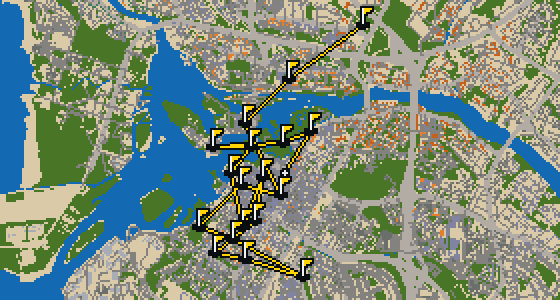
This is a full round of eighteen holes across Hirvensalo, following a 10.6 km walk through the real streets of the city. The map uses the actual urban layout, where the ball banks off building facades and rolls toward landmarks like Turun tuomiokirkko. These real attractions are what the holes are built from, connected by thirty portals for fast travel. Skip knows every nook of these pavements, even the spots where the best crumbs hide.

18 HOLES - PAR 54

Oulu

18 stops

This is a full 18-hole round through Oulu. The map is the real city and the game is played on its actual streets, where the real attractions like Oulun linna are what the holes are built from. The ball travels 11.4 km and uses 6 portals to bridge the gaps. Skip is a local guide who knows every nook of these pavements, even if a stray crumb occasionally distracts the view.

18 HOLES - PAR 56

Tampere

18 stops

Banking a ball off the brick and glass of Nokia Arena feels different than the softer edges of the parks. This round takes place in Tampere, using the actual city map and its real streets as the course. The holes are built directly from the local attractions, and Skip knows every sidewalk and ledge. It is a full 18-hole round covering 11.3 km, with 14 portals to help the ball skip across town.

9 HOLES - PAR 27

Porvoo

9 stops

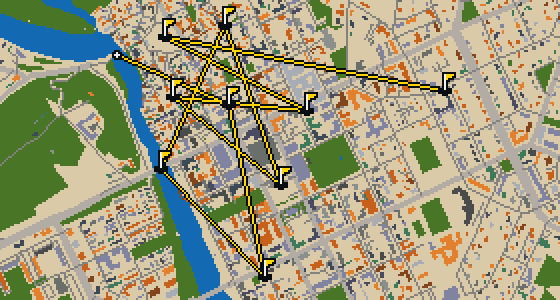
This is Porvoo, where the map is the real city and the round is played on its actual streets. The holes are built from real attractions, ending at the Porvoon tuomiokirkko. Skip knows these corners well, though a pigeon mostly cares about the crumbs. It is a quick 9-hole round with a par of 27, covering a 4.7 km walk that uses 2 portals to bridge the gaps.

18 HOLES - PAR 53

Helsinki

18 stops

This is a full round through Helsinki. The map is the real city and the ball rolls across its actual streets, banking off facades to reach landmarks like the Ateneum. This 18-hole course covers 10.2 km and uses 76 portals to bridge the gaps between the attractions. Skip is a local guide who knows these sidewalks and every shortcut available to a pigeon, ensuring the path is clear. The real city attractions are what the holes are built from, turning the urban geography into a game.

FAQ

Is it free to play?

Yes. Every course runs in the browser with no account and no install.

Do I need to be in the city?

No. The full round plays from anywhere. Walking the real route is a nice way to see the city, but it is not required.

Are the maps real?

Yes. The geometry comes from OpenStreetMap data, rendered chunky on purpose. Streets, water and parks sit where they really are.