
OSTRAVA - 9 HOLES - FREE

OSTRAVA
CITY MAP MINIGOLF

Ostrava - 9 stops - par 28

This is Ostrava. The map follows the real city layout and the round is played on its actual streets, where landmarks like the Slezskoostravský hrad form the holes. Skip knows these pavements well, even the spots where the best crumbs land. It is a quick round of 9 holes with a par of 28, covering a walk of 5.6 km through the city.

Trouble loading? Open the game in its own tab.

HOW IT WORKS

01

Pick a city

The course is drawn on the real street grid, so the map you play is the map you walk.

02

Putt to the pin

Drag to aim, release to swing. Buildings bounce and water costs you a stroke.

03

Sightsee between strokes

Every hole ends at an attraction. Sink the putt, read the story, walk to the next tee.

THE OSTRAVA ROUND - STOP BY STOP

HOLE 1 - PAR 3

Evangelický Kristův kostel

The spire of Evangelický Kristův kostel rises 60 meters above the city. This church building is a Simultaneum and is designated as a cultural monument of the Czech Republic. The structure was created from 1905 to 1907, with Karl Troll and Ludwig Faigl serving as the architects. You can pick out the influence of historicist architecture in the design, specifically the Renaissance Revival architecture that defines its exterior. It is a significant landmark in Ostrava for those interested in the religious and architectural history of the region. The building stands as a clear example of how early twentieth-century styles were applied to religious spaces in this part of the country, combining the work of two distinct architects into one cohesive monument.


Wikidata

HOLE 2 - PAR 4

Komorní scéna Aréna

Look closely at the architecture of this theatre building in Ostrava. Inside, you will find the Aréna Chamber Theatre. This venue is a chamber theatre that was founded in 1994. It is a place that continues in the tradition of the Music Theatre, which had existed since 1951. I find the atmosphere here quite different from the larger stages in the city, making it a great spot for those who prefer a more intimate performance. Whether you are a fan of the performing arts or just exploring the streets of Ostrava, this building is a key part of the local cultural scene. It is a wonderful place to stop and appreciate how the city maintains its artistic heritage through these specialized spaces.

Wikidata · Wikipedia

HOLE 3 - PAR 3

Slezskoostravský hrad

Duke Mieszko I of Cieszyn is the man behind this site, having built the castle in 1290. You can pick out a mix of Gothic and Renaissance architectural styles throughout the structure. It is a cultural monument of the Czech Republic located in Slezská Ostrava, within the Moravian-Silesian Region. The castle was positioned on the border between Moravia and the Duchy of Cieszyn, sitting close to where the Lučina and Ostravice rivers meet. Today, it functions as an event venue and draws 35,517 annual visitors. I've noticed the river views make for a great backdrop, though I usually prefer the higher ledges for a better view of the crowds. It is a wonderful spot to see how the local architecture evolved over the centuries while exploring the grounds.

Wikidata · Wikipedia

HOLE 4 - PAR 3

Divadlo Antonína Dvořáka

Divadlo Antonína Dvořáka is a theatre building located in Ostrava, Czech Republic. This opera house opened in 1907 and was designed by the architect Alexander Graf. It holds a significant place in the local arts scene, as it has been one of two permanent venues of the National Moravian Silesian Theatre since 1919. When you look at the facade, you can pick out the influence of Graf's design on the city's streetscape. I've found that the building's presence adds a certain weight to the neighborhood, making it a great spot to pause and appreciate the city's cultural architecture before moving on to your next stop. It is a wonderful example of how the city has preserved its artistic spaces over the decades for everyone to enjoy.

Wikidata · Wikipedia

HOLE 5 - PAR 3

svatý Václav

Svatý Václav is a church building. This site is dedicated to spiritual practice and serves as a place of worship for the community. Beyond its religious function, the building is recognized for its historical and architectural value on a national level. It is officially designated as a cultural monument of the Czech Republic. This designation ensures that the site is preserved as a part of the country's shared heritage. Visitors to the area can see how the structure fits into the surrounding urban environment while remaining a dedicated space for reflection and faith. Whether you are visiting for the history or the architecture, the building remains a significant landmark within the city of Ostrava.

Wikidata

HOLE 6 - PAR 4

Katedrála Božského spasitele

Two towers reaching 67m in height define the skyline here. This is Katedrála Božského spasitele, a Catholic cathedral and church building. Construction on the site started in 1883 and was completed in 1889. The exterior was designed by Gustav Meretta, and the interior was designed by Max von Ferstel. Because of its significance, the cathedral is a cultural monument of the Czech Republic. It is a place of worship and a prominent landmark within Ostrava. When you visit, you can observe the architectural details of the exterior and the specific interior design elements created by von Ferstel. This site remains one of the most important religious buildings in the area, preserving the history of its construction from the late nineteenth century for all who enter the building today.

Wikidata · Wikipedia

HOLE 7 - PAR 3

Divadlo Petra Bezruče

Let me show you Divadlo Petra Bezruče, which is a theatre building located here in the city. When you look at the exterior, you can pick out the specific vision of the man who created it, as Josef Dostál is the architect of Divadlo Petra Bezruče. It is a notable spot for those interested in the local performing arts scene and the architectural history of the region. I find the building has a presence that makes it easy to spot while you are moving through the neighborhood. Whether you are visiting for a professional show or just passing through on your way to another landmark, it is a piece of the city that defines the local culture for everyone who visits. It remains a key point of interest for anyone exploring the city's built environment.

Wikidata

HOLE 8 - PAR 3

sv. Josef

The sv. Josef is a church building located in the city of Ostrava. It is a place of worship where you can observe the architectural style of the structure. Visitors often stop here to appreciate the building's presence within the local neighborhood.

Wikidata

HOLE 9 - PAR 2

Národní zemědělské muzeum

Let me show you the Národní zemědělské muzeum. This is a museum located here in Ostrava. It is a place dedicated to the history and practice of agriculture, providing a space where visitors can learn about the tools and techniques used to work the land. I can tell you that this specific institution was founded in 2020. Whether you are interested in the evolution of farming or just looking for a quiet place to explore the city's cultural offerings, this museum is a noteworthy stop on your journey through the streets. I usually find the atmosphere here quite calming compared to the busier parts of the city center, and it is a great spot to see how the local region has changed over time through its relationship with the earth.

Wikidata

OTHER COURSES

18 HOLES - PAR 54

Prague

18 stops

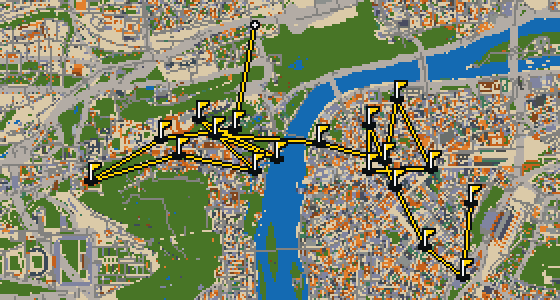
Banking a ball off the heavy stone of the Národní muzeum requires a firm touch. This round takes place in Praha, where the map is the real city and the game is played on its actual streets. The holes are built from real attractions, and the ball travels 10.8 km across a full 18-hole course. Portals help bridge the gaps between the distant districts. Skip knows every cobblestone here and is the local guide for the walk.

9 HOLES - PAR 25

Český Krumlov

9 stops

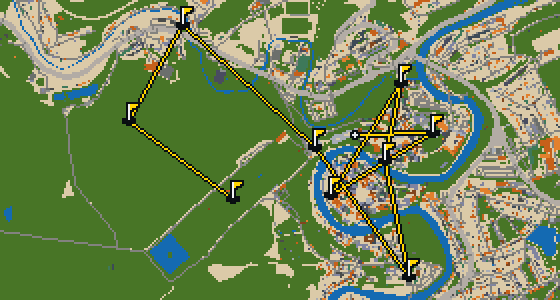
Český Krumlov is a city of tight bends and river views, and the map follows those real streets exactly. The round is a quick 9 holes with a par of 25, using attractions like hrad a zámek Český Krumlov as the actual holes. A few portals help the ball skip across the 4.6 km walk. Skip knows every ledge and cobblestone from a bird's eye view.

18 HOLES - PAR 55

Brno

18 stops

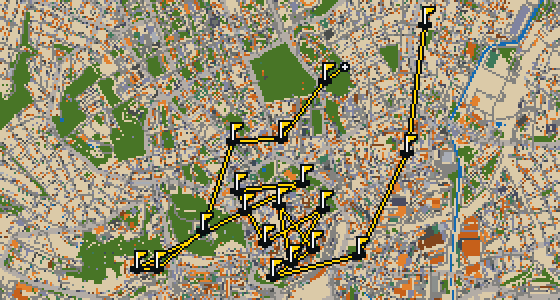
The ball finishes its journey at the Muzeum romské kultury in Brno. This round uses the real city map, where the ball rolls across actual streets and banks off building facades. The holes are built from real local attractions. Skip knows every sidewalk here and acts as the guide for this full round of 18 holes with a par of 55. The walk covers 10.8 km and uses 6 portals to move between districts.

FAQ

Is it free to play?

Yes. Every course runs in the browser with no account and no install.

Do I need to be in the city?

No. The full round plays from anywhere. Walking the real route is a nice way to see the city, but it is not required.

Are the maps real?

Yes. The geometry comes from OpenStreetMap data, rendered chunky on purpose. Streets, water and parks sit where they really are.