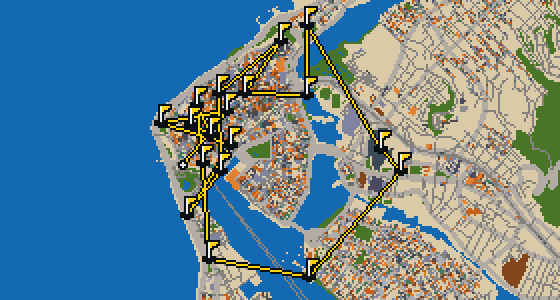
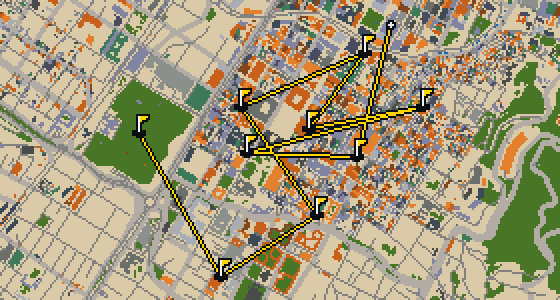
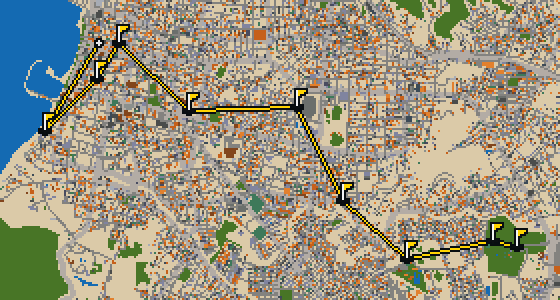
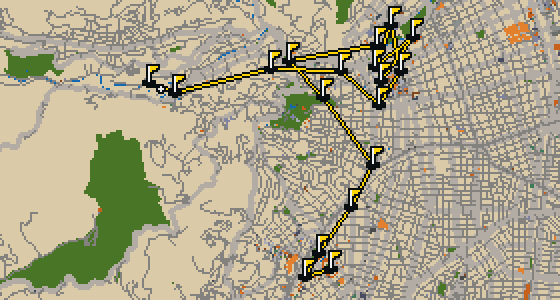
THE MEDELLÍN ROUND - STOP BY STOP



Monumento a la Raza

Museo de Antioquia
Founded in 1881, the Museo de Antioquia is an art museum in Medellín. Since its early days, it has become one of the National Monuments of Colombia. When you walk through the galleries, you can pick out a large collection of works by Fernando Botero. You will also find a large collection of works by Pedro Nel Gómez. I find that the scale of the art here makes the rooms feel different than other museums. It is a place where the city's artistic identity really comes together for every visitor to see.


Iglesia de San Benito
Iglesia de San Benito is a church building located in the city. It is built in the Romanesque Revival architecture style. This specific architectural approach informs the design and appearance of the building, making it a distinct site for those interested in the city's religious structures. The church remains a significant presence in the neighborhood, characterized by the details associated with the Romanesque Revival style.


Parque Berrío
You will first notice the bustle of Parque Berrío, an urban plaza located in the geographical heart of Medellín, Colombia. It is a central park where the city's energy is most visible. The space is named after Pedro Justo Berrío, who was a conservative politician and a governor of Antioquia. I've found that the crowd here always keeps things interesting. Whether you are passing through or stopping to look around, it is the best place to feel the pulse of the city.


Lido
You might think this is just another park structure, but it is actually Teatro Lido, a Colombian theater. I can show you where it sits on the southeastern coast of Park of Bolívar. The theater began operating in 1945 and is currently administered by the Mayor of Medellin. If you enjoy the arts, you can pick out the scale of the place by its capacity for 1,100 spectators. After a methodical restoration, the building was reopened in 2007. It is a great spot to stop and look at the architecture while you walk through the city.

Palacio Egipcio

Basílica Metropolitana de Medellín
The Basílica Metropolitana de Medellín is a Catholic cathedral located in the Villanueva neighborhood. The inception of the building was in 1931, and it was designed by the architect Charles Émile Carré. This structure is built in the Romanesque Revival architecture style and is dedicated to the Virgin Mary under the title of the Immaculate Conception. It has since been designated as a Bien de Interés Cultural del Ámbito Nacional by Colombia, ensuring the preservation of this landmark for the city and the nation.

Teatriados

Capilla Hospital Universitario

Herbario JAUM

Parque Explora
You can start by testing out one of the 300 interactive attractions before taking in the rest of Parque Explora. This science museum in Medellín opened in 2008 and was loosely modeled after San Francisco's Exploratorium. It is a massive space where you can visit a television studio, a 3D auditorium, a planetarium, and a vivarium. I've always found the energy here quite infectious, though I mostly stick to the rafters to keep a bird's-eye view of the crowds. It is a great place to spend a few hours seeing how things work.

Bloque 15 - Museo Universitario

El sagrario

Plazoleta Luis Fernando Barrientos

Centro de fé y esperanza cede central

Jardín Botánico
Located in Medellín, the Joaquin Antonio Uribe Botanical Garden is a botanical garden that offers a wide natural escape. You can find 4,500 flowers across the 14 hectare grounds, making it a prime spot for nature lovers. I often see the 139 recorded bird species flitting through the trees. One of the most striking features is the Orchideorama, an architectural space where a collection of orchids is preserved. It is a great place to slow down and see the city's plant life up close.

Plazoleta José Torres Meneses

Parque de los Deseos
Let me show you Parque de los Deseos. This place is a park, providing an open area for people to gather and enjoy the outdoors. I've noticed it is a great spot for anyone looking to take a break from the city bustle.