
QUITO - 9 HOLES - FREE

QUITO
CITY MAP MINIGOLF

Quito - 9 stops - par 26

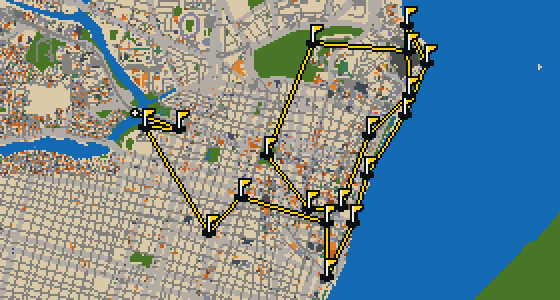
Banking a ball off the carved stone and gilded facades of the Iglesia de la Compañia de Jesus feels like playing in a jewelry box. This round takes place on the real streets of Quito, where the city map is the course. Real attractions are the holes and rails for a quick 9-hole round over 4.5 km, connected by 14 portals. Skip knows these sidewalks by heart.

Trouble loading? Open the game in its own tab.

HOW IT WORKS

01

Pick a city

The course is drawn on the real street grid, so the map you play is the map you walk.

02

Putt to the pin

Drag to aim, release to swing. Buildings bounce and water costs you a stroke.

03

Sightsee between strokes

Every hole ends at an attraction. Sink the putt, read the story, walk to the next tee.

THE QUITO ROUND - STOP BY STOP

HOLE 1 - PAR 3

Catedral Metropolitana Quito

The Catedral Metropolitana Quito is a Catholic cathedral located on the southwestern side of the Plaza de la Independencia. The inception of this cathedral was in 1565, and the building is designed in the Gothic architecture style. For centuries, it has held a central role in the religious administration of the city and the surrounding region. It served as a seat of the Diocese of Quito from 1545 until 1848. Following that period, it was elevated to an Archdiocese in 1848. In 1995, the site was further elevated to the Cathedral of Ecuador. This long progression of titles reflects the growing importance of the site within the church hierarchy over several hundred years, marking its transition from a diocesan seat to a national symbol.


Wikidata · Wikipedia

HOLE 2 - PAR 3

Museo Camilo Egas

You might expect another general collection of colonial works, but this is actually an Ecuadorian art museum. I can show you the Museo Camilo Egas, which is dedicated specifically to the modernist painter Camilo Egas. It is located in Quito and was established in 1980. Whether you are a fan of modernism or just looking for a quiet spot to appreciate local talent, this museum offers a focused look at one of the country's most influential artists. I usually find the atmosphere here quite different from the busier plazas nearby, making it a great place to slow down and really look at the brushwork. It is a specialized destination that avoids the crowds of the larger institutions while still providing a high level of cultural insight into the Ecuadorian art scene.

Wikidata · Wikipedia

HOLE 3 - PAR 3

Convento Máximo de La Merced

The Mercedarian Order established their presence in the region by creating the first church of their order in Ecuador. This site is the Convento Máximo de La Merced, which is a church building and a minor basilica. Known as the Basilica of Nuestra Señora de la Merced, it is a Catholic temple situated in the Historic Center of Quito. Because Quito is the capital of Ecuador, this location is a central point of interest for those visiting the city. The site is not only a place of worship but also continues to serve as the headquarters of the Mercedarian Order in Ecuador. You can find this basilica standing as a key part of the religious architecture within the historic heart of the capital.

Wikidata · Wikipedia

HOLE 4 - PAR 2

Museo de la Ciudad

Let me show you Museo de la Ciudad, a museum located on Garcia Moreno Street. If you are wandering through the colonial center of Quito, Ecuador, you will find this spot situated between Morales and Rocafuerte. It was founded in 1998 and offers a dedicated space to learn about the local area. I often see people pausing here during their walks through the historic district, and it is a great place to get your bearings in the heart of the city. When you visit, take a moment to look at how the museum fits into the surrounding streetscape of the colonial center. It is one of those places that helps you understand the layout of the neighborhood while you explore the various exhibits inside. I find that the walk along Garcia Moreno Street provides some of the best views of the city's traditional architecture.

Wikidata · Wikipedia

HOLE 5 - PAR 3

Museo de Arte Precolombino Casa del Alabado

You will first notice the colonial house that holds this art museum. Built in the 17th century during the Spanish Colony, the building provides a historic setting for the exhibits inside. The Museo de Arte Precolombino Casa del Alabado had its inception in 2010 and focuses on Pre-Columbian art here in Quito, Ecuador. It is a place where the architecture of the colony meets the ancient history of the region. I find the contrast between the house and the artifacts quite striking. Visitors can see a significant portion of the museum's holdings, as it maintains a collection of over 5,000 archaeological pieces, with 500 of them kept on permanent display for the public to see.

Wikidata · Wikipedia

HOLE 7 - PAR 3

Teatro Sucre

Look for the signage and the rails of the Teatro Sucre tram stop. This point in the city is a tram stop, making it a key location for anyone navigating the local transit system. Whether you are visiting the area for the first time or just passing through, it is a useful landmark for getting your bearings in the city. I've noticed it is a handy place to pause before deciding which direction to head next. Having a reliable transit point here helps you avoid long walks when you're tired from sightseeing. It's the kind of spot where you can step off the platform and immediately feel the energy of the surrounding district. I always appreciate how these stops break up the urban walk and give you a moment to check your map.

Wikidata

HOLE 8 - PAR 3

Iglesia de la Compañia de Jesus

The façade of the main temple is entirely carved in volcanic stone. This intricate detail introduces the Iglesia de la Compañia de Jesus, a Jesuit church built in the Spanish Baroque architecture style. The inception of the church was in 1605. This building is part of a larger Catholic clerical complex known as the Church and Convent of San Ignacio de Loyola de la Compañía de Jesús de Quito. You can find this complex in the Historic Center of Quito, specifically located on the corner formed by calles García Moreno and Sucre. It is a site of significant architectural detail and religious history within the city, where the volcanic stone work of the exterior provides a stark contrast to the interior's reputation.

Wikidata · Wikipedia

HOLE 9 - PAR 4

Iglesia de Santo Domingo

The Iglesia de Santo Domingo is a church building incorporated with a parish hall. When you arrive, you will notice that the site is not just a single sanctuary, but a combined complex where the church building and the parish hall are integrated. This layout allows the religious services and the community activities of the parish to exist within the same structural footprint. For any visitor to the city, this location is a primary example of how a church building incorporated with a parish hall functions as a center for both spiritual and social life. The physical connection between the two spaces is the most defining characteristic of the site, making it a notable stop for those observing the city's religious buildings and how they are organized to serve the local population.

Wikidata

STOP 10

La Virgen de El Panecillo

Let me show you La Virgen de El Panecillo. This monument in Quito, Ecuador, began its inception in 1975. It is a colossal statue that stands 30 meters high, making it a prominent sight for anyone visiting the city. You can find it located on the top of the hill of El Panecillo, which provides a great vantage point for the surrounding area. I've noticed that the altitude up there makes for some very breezy landings for us birds when we are looking for a place to rest. Whether you are interested in the scale of the work or the specific location on the hill, this statue is a key landmark of the city. It is an impressive piece of art that dominates the skyline and welcomes everyone who arrives in the capital.

Wikidata · Wikipedia

OTHER COURSES

18 HOLES - PAR 55

Guayaquil

18 stops

Guayaquil looks different from a rooftop, but the ball stays on the pavement. The map follows the real city and the round is played on its actual streets, where the holes are built from landmarks like the Faro del Cerro Santa Ana. This is a full 18-hole round with a par of 55, covering a walk of 11.5 km and using 6 portals to bridge the gaps. Skip knows every corner of these blocks and will be the local guide.

FAQ

Is it free to play?

Yes. Every course runs in the browser with no account and no install.

Do I need to be in the city?

No. The full round plays from anywhere. Walking the real route is a nice way to see the city, but it is not required.

Are the maps real?

Yes. The geometry comes from OpenStreetMap data, rendered chunky on purpose. Streets, water and parks sit where they really are.