
ODENSE - 9 HOLES - FREE

ODENSE
CITY MAP MINIGOLF

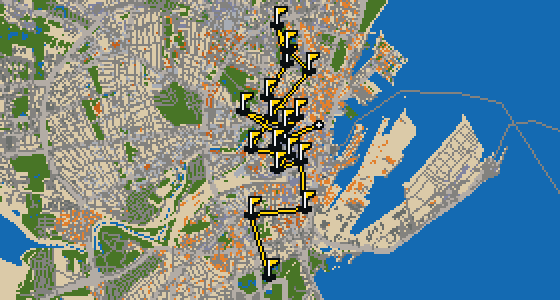
Odense - 9 stops - par 26

Banking a ball off the brickwork of Sankt Knuds Kirke requires a steady wing. This round takes place on the real streets of Odense, where the map is the city itself and the attractions are the holes. It is a quick 9-hole round covering 5 km, with 8 portals to speed the walk. Skip knows every cobblestone here.

Trouble loading? Open the game in its own tab.

HOW IT WORKS

01

Pick a city

The course is drawn on the real street grid, so the map you play is the map you walk.

02

Putt to the pin

Drag to aim, release to swing. Buildings bounce and water costs you a stroke.

03

Sightsee between strokes

Every hole ends at an attraction. Sink the putt, read the story, walk to the next tee.

THE ODENSE ROUND - STOP BY STOP

HOLE 1 - PAR 2

Sankt Knuds Kirke

The remains of Canute and his brother Benedict are on display in the church's crypt. This site is Sankt Knuds Kirke, a Lutheran cathedral that was started in 1499. The building is an example of Brick Gothic architecture, which is a specific form of the Gothic architecture style. Also known as Odense Cathedral, the site is named after the Danish king Canute the Saint, otherwise known as Canute IV. Visitors can see how the Brick Gothic style defines the structure of the building. The cathedral remains a central point of the city, housing the remains of the king and his brother within its crypt. It stands as a preserved piece of the Gothic architecture style, reflecting the design choices made when construction began in 1499.


Wikidata · Wikipedia

HOLE 2 - PAR 3

H. C. Andersens Hus

H. C. Andersens Hus is a museum located in Odense. Dedicated to the author Hans Christian Andersen, the site provides a comprehensive look at his life and work. You can pick out several distinct areas during your visit, as the museum consists of the H.C. Andersens Hus, Ville Vau, the Hans Christian Andersen Garden, and H.C. Andersen's Childhood Home. I've found that the layout makes it easy to wander between the different sections, moving from the garden to the childhood home. Whether you are a fan of his fairy tales or just exploring the city, it is a significant stop in the neighborhood. The variety of spaces within the museum complex ensures there is plenty to see as you walk through the different exhibits.

Wikidata · Wikipedia

HOLE 3 - PAR 3

Danmarks Jernbanemuseum

You are standing at a former engine shed adjacent to the main railway station of Odense. This industrial building houses the Danmarks Jernbanemuseum, which is the national railway museum of Denmark. Established in 1975, it has grown to become the largest railway museum in Scandinavia. I always find the gritty, open feel of the engine shed a great way to set the mood before you start looking at the trains. Whether you are a rail enthusiast or just passing through the city, the sheer scale of the collection here is something you can pick out immediately. It is a place where the architecture of the building itself tells as much of the story as the exhibits inside, making it a must-visit for anyone interested in how the country moved in the past.

Wikidata · Wikipedia

HOLE 4 - PAR 3

Gråbrødre Kloster

Gråbrødre Kloster is a monastery. Founded in 1279, this site is a monument on the Kulturstyrelsen register. For those visiting Odense, the monastery is a place where the physical architecture reflects its original purpose as a religious house. You can observe the structure of the buildings and the layout of the grounds to understand how the monastery functioned in the past. The inclusion of the site on the Kulturstyrelsen register means it is recognized as a protected monument. This ensures that the monastery remains a permanent part of the city's layout and continues to be preserved for future generations to visit and study. It is a direct link to the religious history of the region, maintained through official heritage registration.

Wikidata

HOLE 5 - PAR 3

Den Fynske Opera

Look for the theatre building known as Den Fynske Opera. It is a place where you can experience the work of an opera company that had its inception in 1996. The history here is a bit of a cycle; an earlier group called Funen Opera opened in 1948 with a presentation of La bohème, but that company closed 16 years after opening as a result of inadequate support. Lars Waage eventually re-established the opera company in 1996, and he served as the creative director until 2007. Whether you are a fan of the arts or just passing through Odense, it is a notable spot in the city. I've noticed the acoustics in these types of halls are always a treat for the ears.

Wikidata · Wikipedia

HOLE 6 - PAR 3

Odense Teater

Look closely at the facade of Odense Teater, a theatre building located in the city of Odense. Designed by architect Niels Jacobsen, the structure dates back to 1796. It is a significant landmark in Denmark, as it is the country's second-oldest theatre. Beyond the main stage and the performances you see from the street, the building also includes a drama school. I have seen plenty of students rushing in and out of the doors with scripts in their hands. Whether you are interested in the history of the building or the performing arts, it remains a centerpiece of the local culture. It is the kind of place where the architecture tells a story long before the curtain even rises for the evening show.

Wikidata · Wikipedia

HOLE 7 - PAR 3

Vor Frue Kirke

Vor Frue Kirke is a church building. It is a place of worship and a significant site within the city. The building had its inception in 1184, making it one of the older structures you will encounter during your visit to Odense. Whether you are interested in the history of the area or seeking a moment of reflection, this church provides a direct connection to the early development of the city. Its presence in the urban landscape offers a sense of continuity and permanence. As you walk through the city, this church building remains a focal point for those visiting the area. It is a place where the history of the community is preserved through its architecture and its continued role as a place of worship for the people of Odense.

Wikidata

HOLE 8 - PAR 3

Benedikts Plads

As you navigate through the heart of Odense, you will come across Benedikts Plads. This spot is a square that allows you to pause and take in the surrounding urban environment. Whether you are following the route of the game or just exploring the city on foot, it is a useful point of orientation for any visitor. In addition to being a square, Benedikts Plads is a street. I usually find the transition between these two functions makes it a lively place to watch people pass by. It is one of those spots where the city's layout feels intuitive yet varied. Taking a moment here lets you get your bearings before moving on to the next landmark in the city center. It is a simple but essential part of the local street map that keeps the traffic and pedestrians moving.

Wikidata

HOLE 9 - PAR 3

Sankt Albani Kirke

You will find Sankt Albani Kirke as a distinct presence in the city. This building is the Roman Catholic parish church of Odense, Denmark. While many of the surrounding structures reflect different traditions, this church provides a specific place of worship for the local Catholic community. The work to create the building started in 1908. It remains an active site of faith and a point of interest for those visiting the city's religious sites. Visitors can observe the architecture of this church building as they move through the streets of Odense. It stands as a place of worship and a center for the Roman Catholic parish in this part of Denmark, maintaining its role in the community since the early twentieth century.

Wikidata · Wikipedia

STOP 10

Banegårdspladsen

Located in the center of the city, Banegårdspladsen is a square that serves as a primary gathering point for Odense. It is an open area where the city's activity converges, making it a useful landmark for anyone trying to get their bearings. Whether you are arriving in town or just passing through, this square is one of the most visible parts of the urban layout. I've noticed it is often a busy spot for people meeting up before heading into the surrounding streets. It provides a wide, breathable space amidst the denser parts of the city center, ensuring there is plenty of room for pedestrians to move around comfortably.

Wikidata

OTHER COURSES

18 HOLES - PAR 53

Aarhus

18 stops

Aarhus is the setting for this round, where the map is the real city and the ball rolls across its actual streets. The holes are built from real attractions, starting with Aarhus Domkirke. Skip is a local guide who knows every corner of the place. This full round of 18 holes covers 10.8 km with a par of 53, using 20 portals to move between districts. A few feathers might fly, but the path is set.

18 HOLES - PAR 53

Copenhagen

18 stops

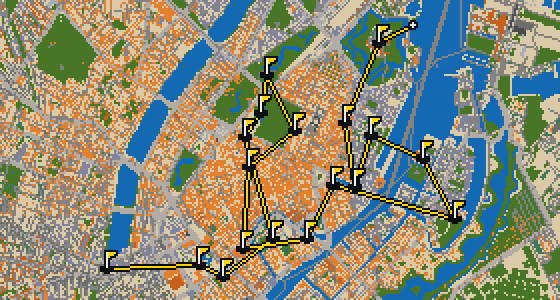
From a perch on the eaves, København looks like a grid of clean lines and salted air. The map is the real city, and the round is played on its actual streets, using attractions like Tivoli as the basis for the holes. This full round of 18 holes covers 10.6 km with a par of 53, using 54 portals to bridge the gaps. Skip knows every cobblestone here, even the ones where a stray crumb might be hiding.

FAQ

Is it free to play?

Yes. Every course runs in the browser with no account and no install.

Do I need to be in the city?

No. The full round plays from anywhere. Walking the real route is a nice way to see the city, but it is not required.

Are the maps real?

Yes. The geometry comes from OpenStreetMap data, rendered chunky on purpose. Streets, water and parks sit where they really are.