
SASKATOON - 9 HOLES - FREE

SASKATOON
CITY MAP MINIGOLF

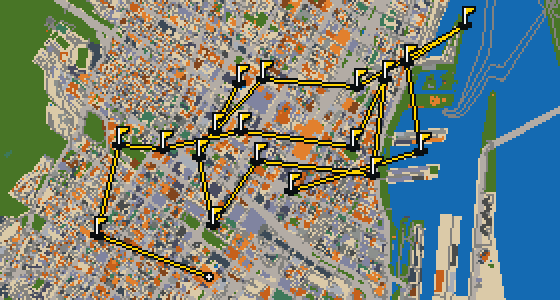
Saskatoon - 9 stops - par 27

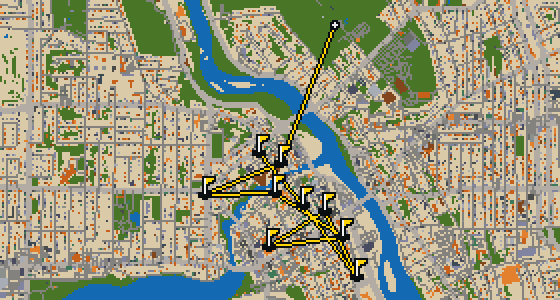
Saskatoon is the setting for this round, with a map based on the real city and play taking place on its actual streets. The holes are built from local attractions like the Remai Modern. Skip knows these sidewalks well, including the shortcuts. This quick 9-hole round covers 5.2 km with a total par of 27.

Trouble loading? Open the game in its own tab.

HOW IT WORKS

01

Pick a city

The course is drawn on the real street grid, so the map you play is the map you walk.

02

Putt to the pin

Drag to aim, release to swing. Buildings bounce and water costs you a stroke.

03

Sightsee between strokes

Every hole ends at an attraction. Sink the putt, read the story, walk to the next tee.

THE SASKATOON ROUND - STOP BY STOP

HOLE 1 - PAR 3

Saint Paul Co-Cathedral

Saint Paul Co-Cathedral is a co-cathedral located in Saskatoon, Saskatchewan, Canada. Work on the building started in 1911, and it was constructed using the Romanesque architecture style. As a parish of the Roman Catholic Church, it is the mother church of the Diocese of Saskatoon. The site is significant not only for its religious functions but also for its connection to recent social unrest. On 24 June 2021 and 2 July 2021, the co-cathedral was vandalized. These events took place in protest of the discovery of unmarked graves connected to the Merieval Indian Residential School. Visitors to the area can see how the building reflects both the early history of the city and the difficult conversations regarding the legacy of residential schools in the region.


Wikidata · Wikipedia

HOLE 2 - PAR 2

The Ukrainian Museum of Canada

The Ukrainian Museum of Canada is a network of museums across Canada located in Saskatoon. As an association, it works to promote Ukrainian cultural life throughout the country, ensuring that traditions and heritage remain visible to all. When you visit, you can pick out exhibits that focus specifically on the experiences of the Canadian Ukrainian diaspora. I have noticed that the collection helps visitors understand the unique journey of people moving from Ukraine to settle in North America. The organization was founded in 1941 and continues to maintain this connection to heritage for visitors and locals alike. Whether you are interested in art, history, or community stories, this site provides a focused look at how the diaspora has integrated into the wider Canadian identity while keeping its original roots alive.

Wikidata · Wikipedia

HOLE 3 - PAR 3

Saskatchewan MADD Monument

The Saskatchewan MADD Monument is a monument that had its inception in 2019. Since that time, it has stood as a visible part of the city for visitors and locals to acknowledge. When you are standing here, you can see how the site integrates into the surrounding area. I find it is a place that encourages a slower pace of movement than the usual city rush, which is a nice change from the frantic energy of the downtown core. Whether you are passing through on a tour or stopping specifically to see the site, it is a significant marker in the local area. It provides a moment of stillness for anyone walking by, making it a notable stop for those wanting to see the more reflective side of the city's public spaces.

Wikidata

HOLE 4 - PAR 3

TCU Place

TCU Place is a convention and arts centre located in the Central Business District of Saskatoon. You can find it situated right next to Midtown Plaza, making it a convenient stop for anyone visiting the downtown core. This performing arts center had its inception in 1968 and continues to be a central part of the city's event scene. It is a massive facility, covering 104,000 square feet. If you look at the history of the building, you will see it was formerly known as the Saskatoon Centennial Auditorium. I have spent a fair amount of time watching the crowds flow between the shopping center and the venue entrance. Whether you are here for a convention or a show, the scale of the place is the first thing you will notice upon arrival.

Wikidata · Wikipedia

HOLE 5 - PAR 4

Spirit of Alliance

Let me show you the Spirit of Alliance. Located here in Saskatoon, this site is a sculpture. It is a point of interest for anyone walking through the city, and you can pick out its form as you pass by. I find that the open space around it makes it a pleasant spot to pause during a tour of the local area.

Wikidata

HOLE 6 - PAR 3

Pioneer Memorial Cairn

Located within the city, the Pioneer Memorial Cairn is a monument that visitors often stop to admire. It is a cairn, constructed from stones to create a lasting physical presence in the local landscape. This particular landmark had its inception in 1952, marking a specific point in the city's history. When you visit, you can pick out the texture of the stacked stones that make up the structure. I find that the way it sits against the backdrop of the city makes it a peaceful spot to pause. Whether you are a tourist or a local, it provides a tangible connection to the past through its simple, sturdy design. It is a great example of how a modest stone structure can hold a place of honor in a growing urban environment.

Wikidata

HOLE 7 - PAR 3

St. Andrew's Presbyterian Church

St. Andrew's Presbyterian Church is a church building featuring the Gothic architecture style. This site is a place of worship and a piece of the city's architectural history. The design of the building is characterized by the specific elements associated with the Gothic style, making it a distinct landmark for those passing through the neighborhood. David Webster and Edward James Gilbert were the architects for the project. Work on the construction of this church building was started in 1951. Whether you are interested in the spiritual purpose of the space or the physical structure of the building, there is much to observe here. It remains a significant example of mid-century religious construction in the region, blending traditional stylistic influences with the needs of the congregation at the time of its creation.

Wikidata

HOLE 8 - PAR 3

Remai Modern

Bruce Kuwabara and KPMB Architects are the architects behind Remai Modern. This public art museum is located in Saskatoon, Saskatchewan, Canada, situated along the west bank of the South Saskatchewan River at the River Landing development in the city's Central Business District. The building was designed by Bruce Kuwabara of KPMB Architects in association with Architecture49 and covers 11,582 square metres. Founded in 2017, the museum provides a dedicated space for art in the heart of the city. I have often noticed that the river views from this spot are quite something, making it a pleasant place to spend an afternoon while you admire the surroundings. Whether you are here for the architecture or the exhibits, the location offers a great vantage point for seeing the river flow through the business district.

Wikidata · Wikipedia

HOLE 9 - PAR 3

Chief Darcy Bear Park

Open green spaces define the layout of Chief Darcy Bear Park. This area provides a break from the surrounding city streets and offers a place for visitors to relax. I find it is a great spot to stretch your legs. This location is an urban park.

Wikidata

STOP 10

K.W. Nasser Plaza

You will likely notice the open space first as you approach K.W. Nasser Plaza. This area is a square that provides a clear break in the urban layout of Saskatoon, making it an easy spot for visitors to pause and orient themselves before continuing their journey through the city. Because it is also a park, it offers a bit of breathing room and a change of pace among the surrounding buildings and busy street traffic. I find it is a handy spot to stop and watch the crowds go by for a few minutes, especially when you need a moment of stillness. Whether you are just passing through or looking for a place to sit, the layout of the plaza makes it a welcoming point of interest for anyone exploring the downtown core on foot.

Wikidata

OTHER COURSES

9 HOLES - PAR 28

Sherbrooke

9 stops

This is Sherbrooke. The map is the real city and the round is played on its real streets, using local attractions like Parc Victoria as the holes. Skip knows these streets by heart. It is a quick 9-hole round with a par of 28, covering a 5.6 km walk that uses 2 portals.

9 HOLES - PAR 27

Kelowna

9 stops

This is Kelowna. The map is the real city and the round is played on its real streets, with the holes built from attractions like the Rotary Centre for the Arts. Skip knows these blocks well. It is a quick round of 9 holes with a par of 27, covering a walk of 5.5 km.

9 HOLES - PAR 30

Regina

9 stops

Banking a ball off the stone facades of St. Paul's Cathedral requires a soft touch. This round takes place on the real streets of Regina, where the city map is the course and local attractions form the holes. It is a quick 9-hole round covering 6.5 km, with a couple of portals to speed things along. Skip knows every curb and crack in the pavement here.

9 HOLES - PAR 27

Burnaby

9 stops

This is a quick nine-hole round through Burnaby. The map is the real city and the ball rolls along its actual streets, banking off building facades toward holes built from real attractions like The Columbia. Six portals help bridge the gaps across the 5.3 km walk. Skip is a local guide who knows these sidewalks well, even the crumbs hidden in the corners.

18 HOLES - PAR 57

Longueuil

18 stops

Longueuil is the setting for this round, with the map following the real city and the ball rolling across its actual streets. The holes are built from real attractions, starting at the Centre Bell. Skip knows every crack in the pavement here. It is a full round of 18 holes with a par of 57, covering a walk of 11.4 km. The ball uses 126 portals to bridge the gaps between the landmarks.

FAQ

Is it free to play?

Yes. Every course runs in the browser with no account and no install.

Do I need to be in the city?

No. The full round plays from anywhere. Walking the real route is a nice way to see the city, but it is not required.

Are the maps real?

Yes. The geometry comes from OpenStreetMap data, rendered chunky on purpose. Streets, water and parks sit where they really are.