
SÃO PAULO - 18 HOLES - FREE

SÃO PAULO
CITY MAP MINIGOLF

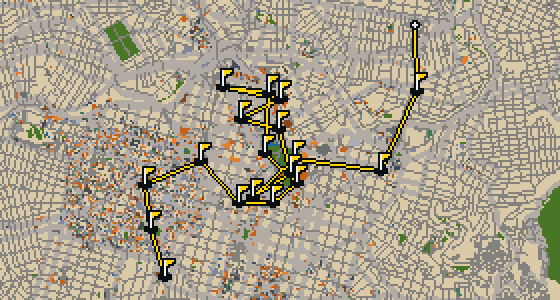
São Paulo - 18 stops - par 52

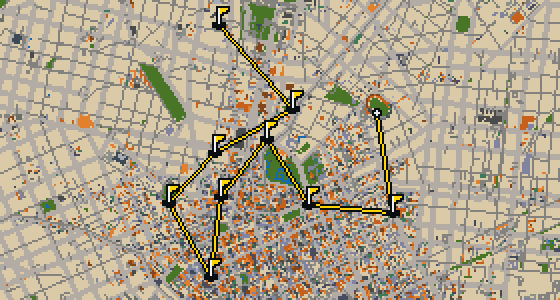
São Paulo is the setting for this full round of 18 holes. The map follows the real city layout, and the ball rolls across its actual streets, banking off facades and heading toward landmarks like the Catedral da Sé. Skip knows these blocks well, having spent plenty of time dodging traffic for a stray crumb. The course covers 10.4 km and uses 120 portals to move the ball between different districts. The holes are built from the real attractions of the city.

Trouble loading? Open the game in its own tab.

HOW IT WORKS

01

Pick a city

The course is drawn on the real street grid, so the map you play is the map you walk.

02

Putt to the pin

Drag to aim, release to swing. Buildings bounce and water costs you a stroke.

03

Sightsee between strokes

Every hole ends at an attraction. Sink the putt, read the story, walk to the next tee.

THE SÃO PAULO ROUND - STOP BY STOP

HOLE 1 - PAR 3

Mirante do Vale

Standing in the heart of São Paulo, Mirante do Vale is a skyscraper that defines the local skyline. Designed by architects Waldomiro Zarzur and Aron Kogan, the building is an example of the International Style. It reaches a height of 170 m and was constructed between 1959 and 1966. I've noticed it's a great landmark for keeping your bearings while moving through the city. You can pick out its clean lines and towering presence from several blocks away, which helps when you are navigating the busy streets below.


Wikidata · Wikipedia

HOLE 2 - PAR 3

Teatro Municipal de São Paulo

Ramos de Azevedo was the architect behind the Teatro Municipal de São Paulo. He created this opera house in the eclectic architecture style, and the project had its inception in 1903. It is a heritage asset listed by IPHAN, CONDEPHAAT Good Class, and Conpresp Good Class. You can pick out the grand scale of the building, which has long been a center for the arts. It famously served as the venue for the Week of Modern Art in 1922. Today, the theatre building continues to be active as it houses the São Paulo Municipal Symphonic Orchestra, the Coral Lírico, and the City Ballet of São Paulo.

Wikidata · Wikipedia

HOLE 3 - PAR 3

Convento São Francisco

You will see a historic site that is recognized as Heritage of Portuguese Influence. Convento São Francisco is a convent and church building that was a religious institution installed in the town of São Paulo during colonial Brazil. The site is recognized as CONDEPHAAT Good Class and Conpresp Good Class. While it began as a place of worship, the convent was converted into a Law School in the 19th century. It remains an important example of the city's early colonial history and its architectural evolution over the centuries.

Wikidata · Wikipedia

HOLE 4 - PAR 3

Edifício Altino Arantes

Look up at the 161.22 meter peak of the Edifício Altino Arantes. This Art Deco skyscraper is a major landmark in São Paulo, Brazil. Its inception was in 1939, and it is recognized for its CONDEPHAAT Good Class heritage. You can also find it referred to as the Banespa Building or, more popularly, Banespão. I've found that the scale of the building makes it a great waypoint for anyone navigating the downtown area. It is one of the most recognizable silhouettes in the city skyline.

Wikidata · Wikipedia

HOLE 5 - PAR 2

Catedral da Sé

The structure reaches 92 meters high. This is Catedral da Sé, a cathedral in the Gothic Revival and Renaissance Revival architecture styles. Its inception was in 1913, and it was designed by architect Maximilian Emil Hehl. Known as the Metropolitan Cathedral of Our Lady Assumption and Saint Paul, it is the cathedral of the Roman Catholic Archdiocese of São Paulo, Brazil. Dom Odilo Pedro Cardinal Scherer is the current and seventh metropolitan archbishop. The site also holds CONDEPHAAT Good Class heritage.

Wikidata · Wikipedia

HOLE 6 - PAR 3

Colégio José de Anchieta

Let me show you Colégio José de Anchieta. This site is a museum where you can learn about the past of the area. It is a great spot for anyone who wants to see how the city has changed over time. I've noticed that the architecture here always catches the eye of visitors.

Wikidata

HOLE 7 - PAR 3

Palácio das Indústrias

Let me show you the Palácio das Indústrias in São Paulo. This museum building is a great example of the eclectic architecture style and was designed by architect Domiziano Rossi. It is a significant spot in the city, recognized with Good Class heritage status from both Conpresp and CONDEPHAAT. Beyond its role as a museum, you can also find a convention center here. I have always found the building's presence in the city quite striking, especially when you see how it anchors the surrounding area. It is a place where the city's history and current public events meet in one grand space.

Wikidata · Wikipedia

HOLE 8 - PAR 3

Largo São Bento

Largo São Bento is a square in São Paulo. The area is home to the Basilica of Our Lady of the Assumption, the São Bento School, and the School of Philosophy of São Bento. Together, these three institutions form the Monastery of Saint Benedict. It is a spot with deep roots, as the area was occupied shortly after the city was founded in 1554. I have found that the atmosphere here feels quite different from the surrounding bustle of the modern city, making it a great place to pause for a moment before you continue your walk.

Wikidata · Wikipedia

HOLE 9 - PAR 3

Igreja de Santo Antônio

Located in Patriarca Square, the Igreja de Santo Antônio is a Catholic temple and the oldest remaining church in the city of São Paulo. It was established in 1592. Throughout its history, the church served different groups, including the Franciscan Order in the 17th century and the Brotherhood of Our Lady of the Rosary of White Men in the 18th century. While the site is historic, the current church building was completed between 1899 and 1919. It is recognized as Heritage of Portuguese Influence and is listed as Conpresp Good Class and CONDEPHAAT Good Class.

Wikidata · Wikipedia

HOLE 10 - PAR 3

Edifício Itália

You might think this is a standard office block, but Edifício Itália is a skyscraper of cultural heritage. Located in the República district of the Central Zone, it is an example of modern architecture designed by Adolf Franz Heep. The inception of the project took place from 1953 to 1965. It stands at 165 m and is recognized as a Conpresp Good Class heritage site. I've seen plenty of things from the air, and this one always stands out in the skyline.

Wikidata · Wikipedia

HOLE 11 - PAR 3

Museu Judaico de São Paulo

Located in São Paulo, Brazil, the Museu Judaico de São Paulo is a Jewish museum. It focuses on the experiences of a specific community, holding exhibits on Jewish life in Brazil. You can see a collection of over 2,000 items brought over by immigrants to Brazil, which provides a physical connection to the people who traveled here to start new lives. I've noticed the city's energy always seems to settle into a respectful hush once you step inside these doors to explore the galleries.

Wikidata · Wikipedia

HOLE 12 - PAR 3

Teatro Maria Della Costa

Teatro Maria Della Costa is a theatre building located in São Paulo, Brazil. It is recognized as cultural heritage and was started in 1954. The building was designed by the architect Oscar Niemeyer, whose influence is visible in the structure. When you visit, you can see a space with a capacity of 370 seats. It is a great spot to appreciate the city's architectural style and the history of its local performance spaces. I usually find the best views of the surrounding streets from the nearby ledges, though the building itself is the real draw.

Wikidata · Wikipedia

HOLE 13 - PAR 3

Teatro Ruth Escobar

This isn't just another city landmark; it is the Teatro Ruth Escobar, a theatre building in São Paulo. Located in Brazil, the venue is named for the actress Ruth Escobar. She founded the theater in 1963, which marked the inception of the space. It is a place where the history of the stage feels alive in the architecture. I've always found that the name carries a certain weight when you see it on the marquee, reminding every visitor of the woman who brought this artistic vision to life in the heart of the city.

Wikidata · Wikipedia

HOLE 14 - PAR 3

Basílica Nossa Senhora do Carmo

Look at the Romanesque Revival architecture of Basílica Nossa Senhora do Carmo. This minor basilica is a church in São Paulo, Brazil, and it was named for Our Lady of Mount Carmel. The inception of the building was in 1934, and it was inaugurated in 1934. Visitors can see the specific stylistic choices of the Romanesque Revival movement reflected in the structure of this church building, which remains a significant point of interest in the city center.

Wikidata · Wikipedia

HOLE 15 - PAR 3

Teatro Brasileiro de Comédia

You will first notice the distinct presence of the Teatro Brasileiro de Comédia, a theatre building located in the Bela Vista neighborhood of São Paulo. It is a site of recognized importance, holding both CONDEPHAAT Good Class and Conpresp Good Class heritage status. This establishment was founded in 1948 by businessman Franco Zampari. Whether you are a fan of the performing arts or simply an admirer of the city's history, this building is a key landmark in the area. I always find the architecture of the Bela Vista neighborhood quite a treat to fly over while I am out on my morning rounds.

Wikidata · Wikipedia

HOLE 16 - PAR 3

Teatro Cultura Artística

Let me show you a landmark in São Paulo. Teatro Cultura Artística is a theatre building that follows the style of modern architecture. This site is a heritage asset listed by IPHAN, as well as a Conpresp Good Class and CONDEPHAAT Good Class heritage asset. Rino Levi is the architect of the building. It is a place of long-held ambition, as the Sociedade de Cultura Artística nurtured the dream of having its own theatre in the city since 1919. I usually see a lot of activity around the entrance.

Wikidata · Wikipedia

HOLE 17 - PAR 2

SESC Consolação

Look for the open doors and active halls of SESC Consolação. This cultural center is a hub for the community, providing a wide range of artistic and social activities. Whether you are looking for a place to learn or a spot to engage with local art, it is a key destination for anyone visiting this part of the city. I often see people gathered here enjoying the diverse programming.

Wikidata

HOLE 18 - PAR 3

Paróquia Nossa Senhora da Consolação

This is not a contemporary installation, but the Paróquia Nossa Senhora da Consolação. Located in the Consolação neighborhood in São Paulo, Brazil, this church building was founded in 1799 and later reformed in 1840. You can pick out the Romanesque Revival architecture style in the details of the facade. The current building was designed by German engineer Maximilian Emil Hehl and was built between 1909 and 1959. It remains a central landmark for those visiting the Consolação district and seeking a place of worship with a long history in the city.

Wikidata · Wikipedia

STOP 19

Praça da República

Rua Pedro Américo, Rua Vinte e Quatro de Maio, Avenida Ipiranga, and Avenida São João all border this large public square. Praça da República covers several city blocks in the historic center of São Paulo, Brazil. It is a park and square located in the República neighborhood. If you look back at the history of the area, you can find that the site had many names before 1889. These included Largo Sete de Abril and Praça 15 de Novembro. I always find the open space a nice break from the surrounding city noise.

Wikidata · Wikipedia

OTHER COURSES

9 HOLES - PAR 26

Porto Alegre

9 stops

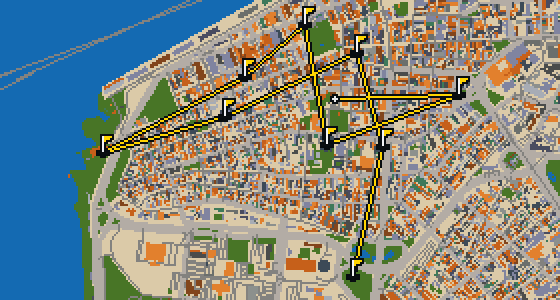
The ball finishes its run at the Teatro de Arena. This round takes place on the real streets of Porto Alegre, using actual city attractions as the holes. Skip knows these sidewalks well, even the crumbs hidden in the corners. It is a quick nine-hole round covering 5 km, with portals moving the ball across the map between the distant parts of the city.

9 HOLES - PAR 28

Recife

9 stops

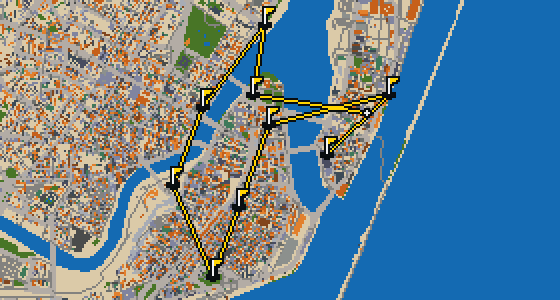
Banking a ball off the stone walls of the Capela Dourada requires a steady touch. This round takes place on the real streets of Recife, where the city map is the course and actual attractions form the holes. A quick 9-hole round covers 5.7 km and uses 104 portals to bridge the gaps. Skip knows these sidewalks better than anyone.

9 HOLES - PAR 29

Curitiba

9 stops

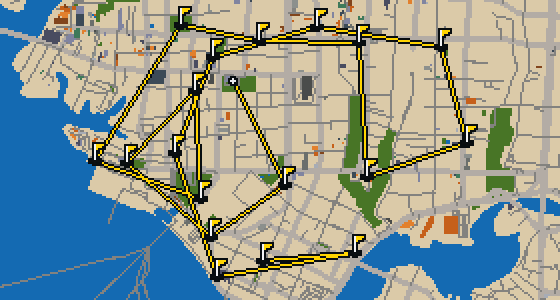
This is Curitiba, where the map is the real city and the round is played on its actual streets. The holes are built from real attractions like the Igreja da Glória. Skip is a local guide who knows the place and every crumb on the pavement. It is a quick round of 9 holes with a par of 29, covering a 6.1 km walk with 48 portals to bridge the gaps.

18 HOLES - PAR 55

Manaus

18 stops

Manaus is the setting for this round, where the map follows the real city and the ball rolls across its actual streets. The holes are built from real attractions, ending at the Igreja dos Remédios. Skip knows these corners well, though a pigeon occasionally gets distracted by the canopy. This full round of 18 holes with a par of 55 covers 11 km, using 8 portals to bridge the gaps between the landmarks.

18 HOLES - PAR 55

Belo Horizonte

18 stops

Belo Horizonte is the setting for this round, with the map following the real city and the ball rolling across its actual streets. The holes are built from real attractions, ending the game at the Museu Histórico Abílio Barreto. Skip is a local guide who knows every corner of the place. This full 18-hole round covers 12 km with a par of 55, using 30 portals to bridge the gaps between the landmarks.

FAQ

Is it free to play?

Yes. Every course runs in the browser with no account and no install.

Do I need to be in the city?

No. The full round plays from anywhere. Walking the real route is a nice way to see the city, but it is not required.

Are the maps real?

Yes. The geometry comes from OpenStreetMap data, rendered chunky on purpose. Streets, water and parks sit where they really are.