
SALVADOR - 18 HOLES - FREE

SALVADOR
CITY MAP MINIGOLF

Salvador - 18 stops - par 56

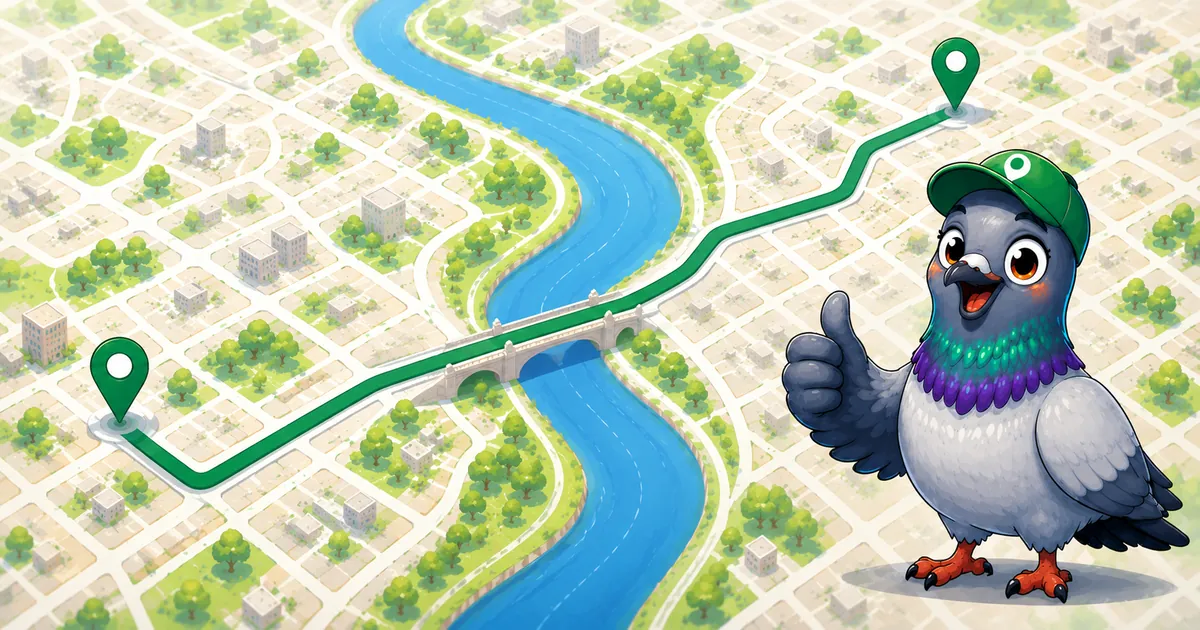
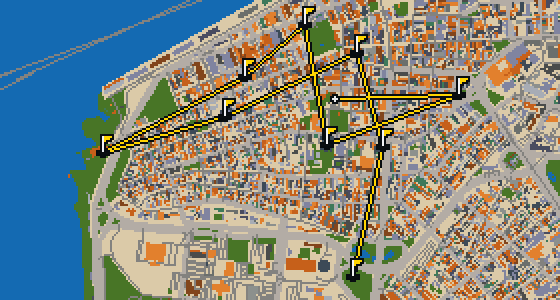
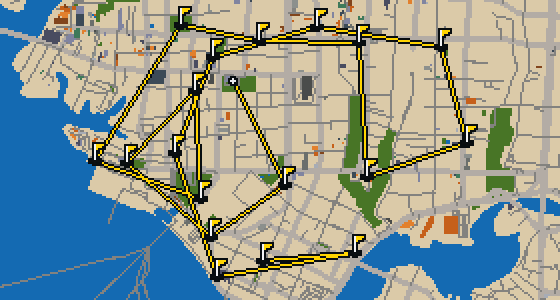
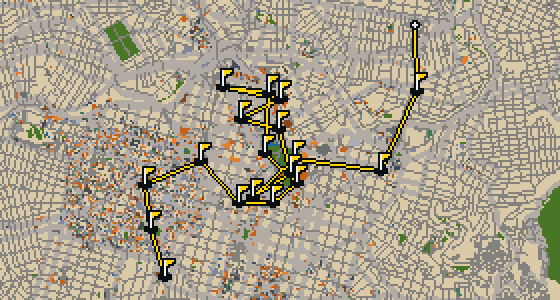
This is Salvador. The map is the real city and the round is played on its real streets, where attractions like the Elevador Lacerda are the holes. Skip is a local guide who knows the place, even the best spots to find a stray crumb. It is a full round of 18 holes with a par of 56. The ball covers 11.2 km and uses 16 portals to move across the city.

Trouble loading? Open the game in its own tab.

HOW IT WORKS

01

Pick a city

The course is drawn on the real street grid, so the map you play is the map you walk.

02

Putt to the pin

Drag to aim, release to swing. Buildings bounce and water costs you a stroke.

03

Sightsee between strokes

Every hole ends at an attraction. Sink the putt, read the story, walk to the next tee.

THE SALVADOR ROUND - STOP BY STOP

HOLE 1 - PAR 4

Casa de Apostas Arena Fonte Nova

You can find Casa de Apostas Arena Fonte Nova in Salvador, Bahia, Brazil. This football-specific stadium opened in 2013 and was built in place of the older Estádio Fonte Nova. It is a massive venue with a maximum capacity of 47,902 people, and you will most often see it used by its primary tenant, Esporte Clube Bahia. I've seen plenty of excited crowds heading this way on match days, and the atmosphere is always something to behold when the local fans gather here.

Wikidata · Wikipedia

HOLE 2 - PAR 3

Museu Abelardo Rodrigues

Let me show you the Museu Abelardo Rodrigues. This art museum was founded in 1971 and serves as a dedicated space for the visual arts in the city. Whether you are a seasoned collector or just someone who enjoys a stroll through a gallery, it is a place worth visiting to see how the city preserves its creative works. I usually see a few people lingering near the entrance, taking in the atmosphere of the neighborhood before they head inside to look at the exhibits.

Wikidata

HOLE 3 - PAR 3

Elevador Lacerda

The Elevador Lacerda is a public urban elevator in Salvador, Brazil. It provides a direct link between the lower city, Cidade Baixa, and the upper city, Cidade Alta. Built between 1869 and 1873, the site uses four lifts to move people between the two levels. Each lift carries 27 passengers on a 30-second ride that costs 0.15 reais. It is a busy hub for the city; in 2019, the elevator transported more than 33,000 passengers per day. I've seen plenty of folks staring up at the height of it from the bottom.

Wikidata · Wikipedia

HOLE 4 - PAR 3

Museu de Arte Sacra

Let me show you the Museu de Arte Sacra. This art museum is also a university museum, meaning it balances public exhibition with academic study. It was founded in 1959. You can pick out a wide variety of pieces here that reflect the spiritual history of the region. I have found that the interior offers a sense of calm that is quite different from the energy of the surrounding neighborhood. It is a place where you can slow down and appreciate the detail of the collections without the usual rush of the city streets.

Wikidata

HOLE 5 - PAR 3

Museu de Arte Moderna da Bahia

The Museu de Arte Moderna da Bahia is housed in the Solar do Unhão, a historical site dating to the 16th century. Founded in 1960 under the architect Lina Bo Bardi, this museum of modern art didn't start in its current home. You can find its origins in the foyer of the Castro Alves Theater, where it remained until moving to this location in 1963. Today, MAM-BA is one of twelve state museums linked to the Institute of Artistic and Cultural Heritage (IPAC). I find the contrast between the old walls and the modern art quite striking.

Wikidata · Wikipedia

HOLE 6 - PAR 2

Obelisco a Dom João VI

Let me show you the Obelisco a Dom João VI. This site is an obelisk located in the city of Salvador. It is a distinct landmark for visitors to notice as they move through the area. I often see other birds resting near the top of these kinds of structures.

Wikidata

HOLE 7 - PAR 3

Teatro Castro Alves

Look at the lines of the structure designed by architect José Bina Fonyat Filho. This is Teatro Castro Alves, a theatre building and concert hall that had its inception in 1967. It is recognized as a historic site and is a heritage asset listed by IPHAN. To add to its status, it is also an IPAC historic heritage site. I've always found the scale of the place impressive from the air, and it is a great spot to stop and admire the local architecture before moving on to the next part of your journey.

Wikidata

HOLE 8 - PAR 2

Teatro Vila velha

Let me show you Teatro Vila velha, a theatre building located on Avenida Sete. This performing arts center is also known simply as Vila. Construction began in 1964, and the building was constructed in 1964. You can find it situated to the west of the Passeio Público, which is a 19th-century Neoclassical public area. I have always found this spot to be a great landmark for getting your bearings in the city, especially when you are navigating the busy streets nearby. It is a place where the city's architectural history and its love for the arts meet in one location.

Wikidata · Wikipedia

HOLE 9 - PAR 4

Largo do Campo Grande

This is not a hidden alley or a private courtyard. It is Largo do Campo Grande, a square located in the southern zone of Salvador, Bahia, Brazil. I can show you around this open space if you have a moment. It is a helpful spot for getting your bearings while you explore the southern part of the city, providing a clear sense of where you are in the local geography. It is a pleasant place to pause and look around before you continue your journey through the streets of Bahia.

Wikidata · Wikipedia

HOLE 10 - PAR 3

Praça da Piedade

Look at the open layout of this area before you take in the whole scene. This is Praça da Piedade, a square in the city. I find it a pleasant spot to pause and watch the world go by.

Wikidata

HOLE 11 - PAR 3

Mosteiro de São Bento

Mosteiro de São Bento is a minor basilica located in Salvador. This Catholic church building is designed in the Neoclassical architecture style, which you can see in the structural details of the facade and interior. It functions as the abbey church of the Monastery of St. Benedict. This monastery is located in Salvador in Bahia, Brazil. Visitors often come to this site to appreciate the religious history and the specific architectural choices that define the building's presence in the city.

Wikidata · Wikipedia

HOLE 12 - PAR 4

Praça da Sé

This isn't just another open space in the city; it is Praça da Sé. It is a square that is recognized as an asset of historic and cultural interest, making it a meaningful destination for any visitor. I can show you around this area so you can see why it is valued for its cultural significance. It is a great spot to pause and take in the local atmosphere while you explore the surroundings. Whether you are here for the history or just passing through, this square is a key part of the city's layout.

Wikidata

HOLE 13 - PAR 4

Forte de São Marcelo

Let me show you Forte de São Marcelo. You can find this museum in Salvador, Bahia, situated on a small bank of reefs about 300 metres from the coast in the Baía de Todos os Santos. It is a heritage asset listed by IPHAN. The fort was started in 1623 and was designed by the architect Francisco Frias de Mesquita. I always think it looks like a giant stone drum floating in the blue water, which is quite a sight from the shore. It is a wonderful spot to see how the city defended its coast centuries ago.

Wikidata · Wikipedia

HOLE 14 - PAR 3

Museu Afro-Brasileiro

The Museu Afro-Brasileiro has been open since 7 January 1982. It is a university museum located in Salvador. Dr. Yeda Pessoa de Castro inaugurated the museum, which came to be through an agreement between the government of Bahia, the city of Salvador, and the Federal University of Bahia. The Ministries of Foreign Affairs and Education and Culture of Brazil were also part of this agreement. I've noticed the area around here is always bustling with energy, making it a great spot to spend a few hours. You can pick out a lot of interesting details in the exhibits here.

Wikidata · Wikipedia

HOLE 15 - PAR 3

Monumento Cruz do Pascoal

Monumento Cruz do Pascoal is a monument and column. It stands 7 meters tall and was started in 1743. This historic site is an oratory that is listed as a heritage asset by IPHAN, and it is also recognized as a Heritage of Portuguese Influence. When you visit, you can see how this structure fits into the surrounding area. I always think it is a great place to pause and take in the view of the city before you move on to your next destination.

Wikidata

HOLE 16 - PAR 3

Forte da Capoeira

Forte da Capoeira is a fort located in Salvador, Bahia, Brazil. During the 17th century, this structure defended the northern limit of the city. Today, the site serves as a cultural center and is recognized as part of the Heritage of Portuguese Influence. You can pick out the historical weight of the place, as it has also been known as the State Prison. I've found the area around here has a very distinct feel compared to the busier docks, and it's a great spot to slow down for a moment.

Wikidata · Wikipedia

HOLE 17 - PAR 3

Forte do Barbalho

Located in Salvador, Forte do Barbalho is a fort that marks the city's coastal defenses. It is recognized as a Heritage of Portuguese Influence and is a cultural heritage site. For those visiting the area, you can pick out the specific characteristics that led to it being a heritage asset listed by IPHAN. I have often noticed how these old fortifications provide a unique vantage point over the water, and this one is no different. It remains a significant piece of the city's architectural history that is open for you to observe.

Wikidata

HOLE 18 - PAR 3

Igreja do Boqueirão

Igreja do Boqueirão is a Catholic church building located in Salvador, Bahia, Brazil. Visitors will first notice the Baroque style of the structure, the inception of which was in 1728. This site is a heritage asset listed by IPHAN. Once you step inside, you can find neoclassical side altars and a neoclassical chancel. To ensure its preservation, the National Historic and Artistic Heritage Institute listed the church as a historic structure in 1951. It remains an important historic site for those visiting the city of Salvador.

Wikidata · Wikipedia

STOP 19

Igreja do Rosário dos Pretos

The Igreja do Rosário dos Pretos is a Catholic church building and a cultural heritage site. Its inception was in 1709, and the building features baroque architecture. This site is a heritage asset listed by IPHAN. The National Institute of Historic and Artistic Heritage formally listed the church as a historic structure in 1938. The building is dedicated to Our Lady of the Rosary and remains a significant historic site in the city.

Wikidata · Wikipedia

OTHER COURSES

9 HOLES - PAR 26

Porto Alegre

9 stops

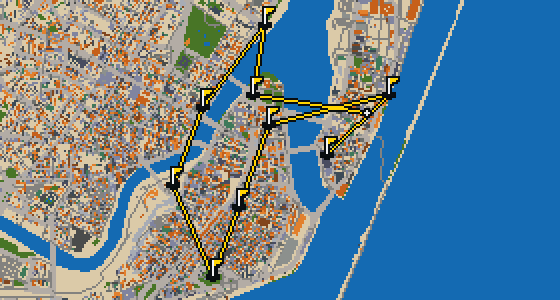
The ball finishes its run at the Teatro de Arena. This round takes place on the real streets of Porto Alegre, using actual city attractions as the holes. Skip knows these sidewalks well, even the crumbs hidden in the corners. It is a quick nine-hole round covering 5 km, with portals moving the ball across the map between the distant parts of the city.

9 HOLES - PAR 28

Recife

9 stops

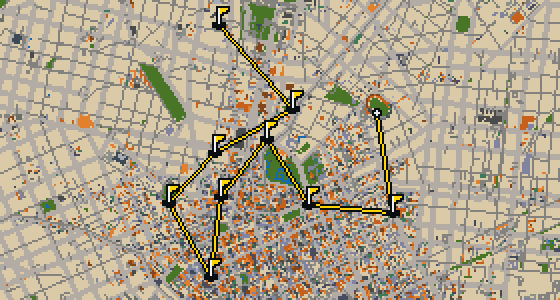
Banking a ball off the stone walls of the Capela Dourada requires a steady touch. This round takes place on the real streets of Recife, where the city map is the course and actual attractions form the holes. A quick 9-hole round covers 5.7 km and uses 104 portals to bridge the gaps. Skip knows these sidewalks better than anyone.

9 HOLES - PAR 29

Curitiba

9 stops

This is Curitiba, where the map is the real city and the round is played on its actual streets. The holes are built from real attractions like the Igreja da Glória. Skip is a local guide who knows the place and every crumb on the pavement. It is a quick round of 9 holes with a par of 29, covering a 6.1 km walk with 48 portals to bridge the gaps.

18 HOLES - PAR 55

Manaus

18 stops

Manaus is the setting for this round, where the map follows the real city and the ball rolls across its actual streets. The holes are built from real attractions, ending at the Igreja dos Remédios. Skip knows these corners well, though a pigeon occasionally gets distracted by the canopy. This full round of 18 holes with a par of 55 covers 11 km, using 8 portals to bridge the gaps between the landmarks.

18 HOLES - PAR 55

Belo Horizonte

18 stops

Belo Horizonte is the setting for this round, with the map following the real city and the ball rolling across its actual streets. The holes are built from real attractions, ending the game at the Museu Histórico Abílio Barreto. Skip is a local guide who knows every corner of the place. This full 18-hole round covers 12 km with a par of 55, using 30 portals to bridge the gaps between the landmarks.

FAQ

Is it free to play?

Yes. Every course runs in the browser with no account and no install.

Do I need to be in the city?

No. The full round plays from anywhere. Walking the real route is a nice way to see the city, but it is not required.

Are the maps real?

Yes. The geometry comes from OpenStreetMap data, rendered chunky on purpose. Streets, water and parks sit where they really are.