
ATHENS - 18 HOLES - FREE

ATHENS
CITY MAP MINIGOLF

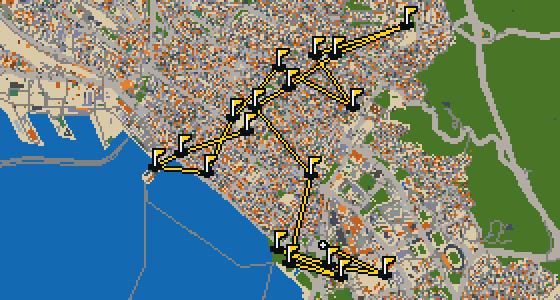
Athens - 18 stops - par 55

Athens is the setting for this round, where the map is the actual city and the ball rolls across its real streets. The holes are built from real attractions, ending the game at Πλατεία Κοτζιά. Skip is a local guide who knows every nook and cranny of these neighborhoods, though he spends most of his time hunting for crumbs. This full 18-hole round covers 10.7 km with a par of 55, using 48 portals to move between the sights.

Trouble loading? Open the game in its own tab.

HOW IT WORKS

01

Pick a city

The course is drawn on the real street grid, so the map you play is the map you walk.

02

Putt to the pin

Drag to aim, release to swing. Buildings bounce and water costs you a stroke.

03

Sightsee between strokes

Every hole ends at an attraction. Sink the putt, read the story, walk to the next tee.

THE ATHENS ROUND - STOP BY STOP

HOLE 1 - PAR 3

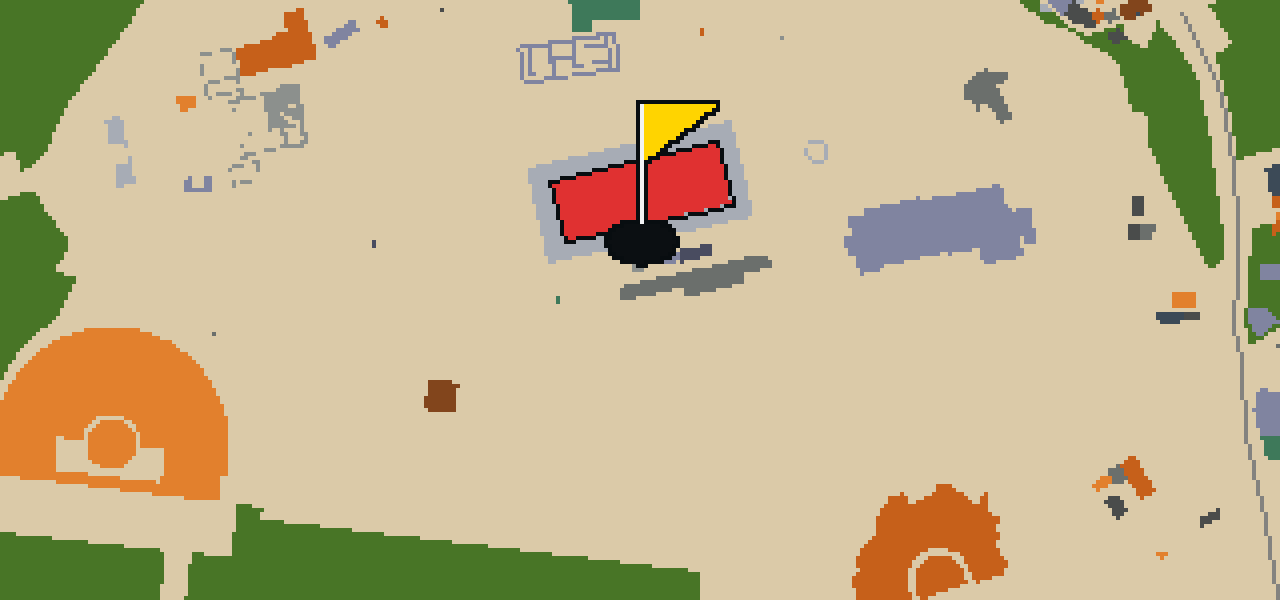
Παρθενών

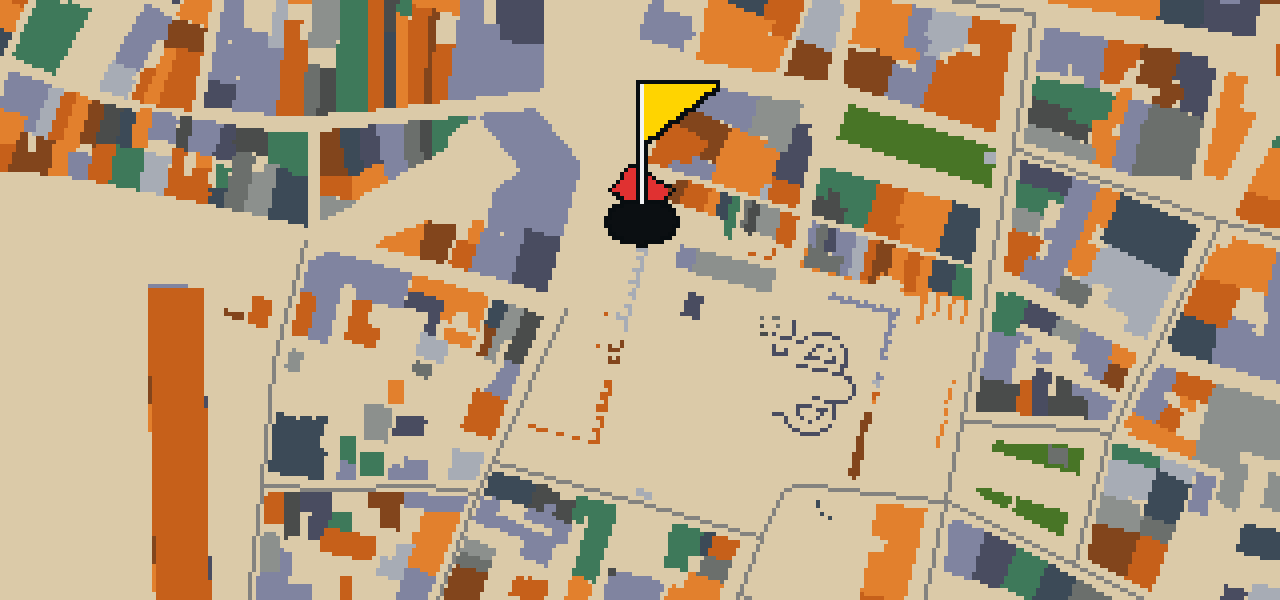
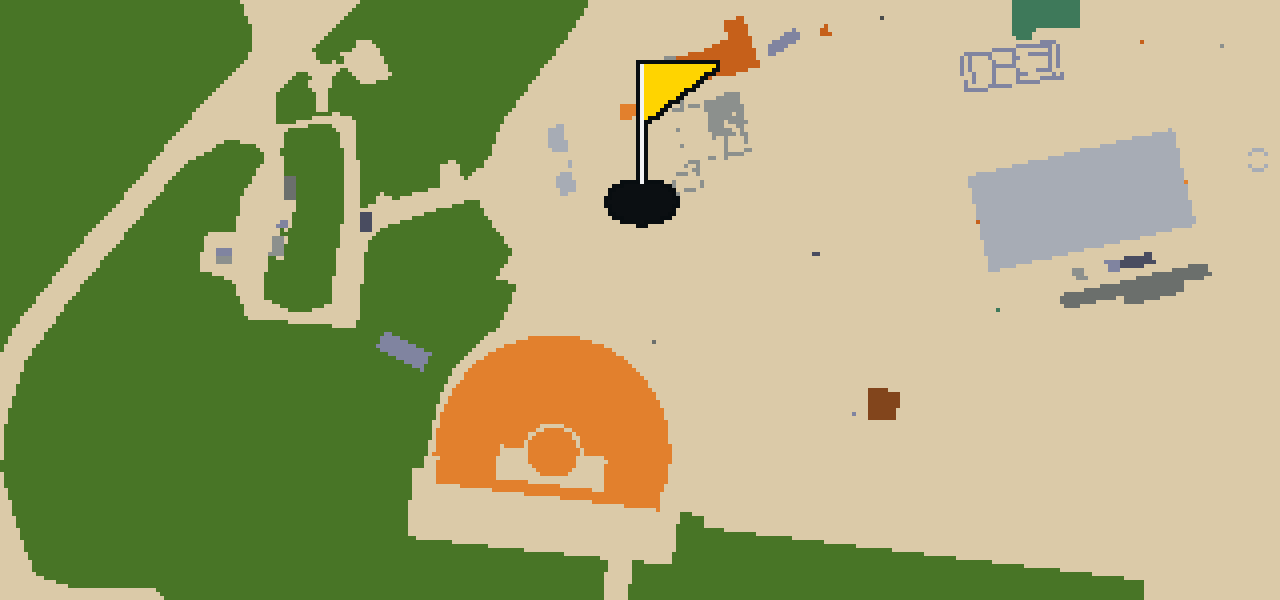
Ictinus, Callicrates, and Phidias are architects of the Parthenon. This ancient Greek temple is a religious building ruin and an Ancient Greek archaeological site located on the Athenian Acropolis in Greece. Dedicated to the goddess Athena, the temple is built in the Doric order and peripteral style. The structure reaches a height of 13.72 meters. You can see how these architects shaped one of the most significant sites in the city, creating a landmark that remains a central point of the Athenian landscape.
Wikidata · Wikipedia

HOLE 2 - PAR 3

Τζαμί Τζισταράκη

The Tzistarakis Mosque is located in Monastiraki Square, central Athens, in the Attica region of Greece. Built in 1759, the structure is an example of Ottoman architecture and is recognized as an archaeological site in Greece. While it began as a place of worship, the building has been repurposed as a traditional art museum. It currently operates as an annex of the Museum of Greek Folk Art, making it an instance of both a mosque and an art museum for those visiting the city center.

Wikidata · Wikipedia

HOLE 3 - PAR 3

Ναός Αθηνάς Νίκης

Built around 420 BC, the Temple of Athena Nike is an ancient Greek temple located on a steep bastion at the southwest corner of the Acropolis. Callicrates served as the architect for this structure, which is built in the Ionic order, amphiprostyle, and tetrastyle styles. The temple is dedicated to the goddesses Athena and Nike. Today, this site is recognized as part of a UNESCO World Heritage Site, preserving one of the most distinct architectural examples of the ancient world.

Wikidata · Wikipedia

HOLE 4 - PAR 3

Ναός Ηφαίστου

You will first notice the precise lines of the Doric order style used here. The Temple of Hephaestus is an ancient Greek temple and archaeological site dedicated to Hephaestus. It is built in the style of ancient Greek architecture and sits on top of the Agoraios Kolonos hill at the north-west side of the Agora of Athens. For a long period of time, specifically from the 7th century until 1834, the building served as the Greek Orthodox church of Saint George Akamates.

Wikidata · Wikipedia

HOLE 5 - PAR 3

Αέρηδες

The Tower of the Winds is an octagonal Pentelic marble tower located in the Roman Agora in Athens. It is an archaeological site in Greece that serves several purposes, acting as a clock tower, a water clock, a weather vane, and a sundial. The structure was completed by about 50 BC at the latest. You can also find a reference to the tower in the De re Rustica, written by Varro around 37 BC. I've always found the marble work here quite impressive.

Wikidata · Wikipedia

HOLE 6 - PAR 2

Μουσείο Ακρόπολης

Let me show you the Acropolis Museum. This site is an example of modern architecture and Minimalism, designed by architects Bernard Tschumi and Michael Photiadis. Beyond the building itself, it is an archaeological museum and museum. It opened in 2009 and now draws 814,565 annual visitors. You can pick out the clean lines of the structure as you approach the entrance. I usually find the glass floors a great spot to keep an eye on the crowds below, as it gives a different view of the ground. It is a striking place to see how contemporary design meets ancient history.

Wikidata · Wikipedia

HOLE 7 - PAR 3

Ναός του Ολυμπίου Διός

The Temple of Olympian Zeus is located in the centre of Athens. This site is an instance of an ancient Greek temple and ruins, built in the Corinthian order. The temple was dedicated to Olympian Zeus and originally included 104 colossal columns. These columns reach a height of 17 meters. While construction began in the 6th century BC, the temple was not completed until the 2nd century AD during the reign of Roman Emperor Hadrian. It remains a significant example of ancient Greek architecture for any visitor to the city.

Wikidata · Wikipedia

HOLE 8 - PAR 4

Παναθηναϊκό Στάδιο

This is not your typical concrete sports venue. Located in Athens, Greece, the Panathenaic Stadium is a multi-purpose stadium and an archaeological site. It is the only stadium in the world built entirely of marble. Construction on the venue was started in 329 BC. You can see the ancient Greek architecture style throughout the structure, which was shaped by architects Ernst Ziller and Anastasios Metaxas. I've always thought the white stone makes it look like a giant bowl from the air.

Wikidata · Wikipedia

HOLE 9 - PAR 3

Μουσείο Κυκλαδικής Τέχνης

Let me show you a spot in Athens where art and archaeology meet. The Museum of Cycladic Art is an art museum and archaeological museum that focuses on a specific regional legacy. Inside, you can pick out a collection of artifacts of Cycladic art. The museum is also known as the Nikolaos P. Goulandris Foundation - Museum of Cycladic Art. It was founded in 1986. I've noticed the sculptures here have a very distinct, minimalist look that makes them stand out from other collections in the city.

Wikidata · Wikipedia

HOLE 10 - PAR 3

Νομισματικό Μουσείο

You can pick out the grand details of the mansion known as Iliou Melathron, which is the former home of the archaeologist Heinrich Schliemann. Today, this building houses the Νομισματικό Μουσείο, a numismatic museum established in 1838. The collection is vast, spanning artefacts from 1400 BC to modern times. I find the sheer variety of the exhibits impressive, as the museum holds over 500,000 coins, medals, engraved gems, weights, stamps and related artefacts. It is a great spot to see how currency and official seals have changed over thousands of years.

Wikidata · Wikipedia

HOLE 11 - PAR 3

Μουσείο Μπενάκη

Located in the Benakis family mansion in Athens, Greece, the Benaki Museum is an art museum, museum, and library. Antonis Benakis established and endowed the museum in 1930 in memory of his father Emmanuel Benakis. Visitors can explore Greek works of art from prehistorical to modern times, alongside a collection of Asian art. The museum in Athens houses over 100,000 artifacts from Greek history. After a re-opening in 2000, the institution expanded to include satellite museums. I've found the mansion's architecture makes for a great landmark while you're navigating the streets.

Wikidata · Wikipedia

HOLE 12 - PAR 3

Πλατεία Συντάγματος

King Otto was the first King of Greece, and after a popular and military uprising on 3 September 1843, he was obliged to grant the Constitution. This event gave the central square of Athens its name, as Syntagma refers to the Constitution and the neighbourhood surrounding the square. You can see the 19th-century Old Royal Palace standing right in front of the plaza. It is a busy spot for locals and visitors, and the metro station below is where lines 2 and 3 connect. I usually keep a sharp eye on the crowds here for dropped snacks.

Wikidata · Wikipedia

HOLE 13 - PAR 3

Μνημείο Λυσικράτους

This isn't a temple or a tomb, but a Choragic Monument. Located near the Acropolis of Athens, the monument of Lysicrates is an archaeological site that showcases ancient Greek architecture. You can pick out a blend of the Corinthian and Ionic orders in its design. It was built by Lysicrates, a patron of musical performances in the Theater of Dionysus, to commemorate a prize won in the dithyramb contest of the City Dionysia in 335/334 BCE. I've noticed it's a great spot to pause and look back toward the hill.

Wikidata · Wikipedia

HOLE 14 - PAR 3

Ἐλευσίνιον

You might think of the Acropolis as one single entity, but the Eleusinion is actually a separate sanctuary located on the lower part of its north slope. This hieron was dedicated to Demeter and Kore and served as the central hub for the Eleusinian Mysteries within the city. Religious activity here is attested from the 7th century BC. Later, the sanctuary was enclosed within the new city walls built after the Herulian sack of Athens in AD 267. I've noticed the ancient Greek architecture here still feels powerful despite the passage of time.

Wikidata · Wikipedia

HOLE 15 - PAR 3

Παναγία Γοργοεπήκοος και Άγιος Ελευθέριος

The Little Metropolis is a Byzantine church located at the Mitropoleos Square. This protected building in Greece is formally known as the Church of St. Eleutherius or Panagia Gorgoepikoos. It is an archaeological site built in the Byzantine architecture style. You can find this church building situated next to the Metropolitan Cathedral of Athens. It is a significant example of the Byzantine architecture style and is recognized as a protected building and an archaeological site within Greece. This church building remains a notable point of interest for those visiting the Mitropoleos Square area.

Wikidata · Wikipedia

HOLE 17 - PAR 3

Παναγία Καπνικαρέα

The Greek Orthodox community established Παναγία Καπνικαρέα in Athens. This church building is a significant example of Byzantine architecture and is officially recognized as a protected building in Greece. Visitors can see its historical importance as it is also classified as an archaeological site. Because it is one of the oldest continuously in use churches in Athens, it remains a living part of the city's spiritual life while preserving the structural elements of its ancient origins.

Wikidata · Wikipedia

HOLE 18 - PAR 4

Ηλιαία

The people of Classical Athens established the Heliaia, which was the largest and most prominent court venue in the city. While the name originally designated this specific location, ancient sources also used the term as a general name for the Athenian popular court system. If you read modern English-language scholarship, you can pick out a distinction in the terminology: the term Heliaia is typically reserved for the venue itself, while the term dikasterion is used for the institutional system. The Heliaia is an instance of a dikasterion. I've seen many tourists get the two terms mixed up.

Wikidata · Wikipedia

STOP 19

Πλατεία Κοτζιά

Πλατεία Κοτζιά is a square located in central Athens, Greece. It was started in 1874 and follows the Neoclassicism style. You can find the City Hall of the Municipality of Athens here, as well as the National Bank of Greece Cultural Center. It is named after Konstantinos Kotzias, a former Mayor of Athens. I have found that the wide open space and the surrounding buildings make this a great spot to pause and orient yourself before heading further into the heart of the city.

Wikidata · Wikipedia

OTHER COURSES

18 HOLES - PAR 54

Thessaloniki

18 stops

Thessaloniki is the setting for this round, where the ball rolls across the actual city streets. Real attractions like the Λευκός Πύργος provide the physical structure for the holes. Skip knows every corner of this place and acts as the local guide, perhaps pausing for a stray crumb. This full round of 18 holes covers 10.5 km with a par of 54, using 28 portals to move between the different districts of the city.

FAQ

Is it free to play?

Yes. Every course runs in the browser with no account and no install.

Do I need to be in the city?

No. The full round plays from anywhere. Walking the real route is a nice way to see the city, but it is not required.

Are the maps real?

Yes. The geometry comes from OpenStreetMap data, rendered chunky on purpose. Streets, water and parks sit where they really are.